How are cities planned – and, above all, for whom? This question served as a central theme throughout the Jane’s Walk Vienna Festival 2026. Co-organizer and expert Cornelia Dlabaja, Endowed Chair for Sustainable Urban Tourism, also provided important insights. Her contributions to the panel discussion and walks demonstrated how closely research, urban development and social engagement are intertwined.
Kickoff at the Gartenbaukino
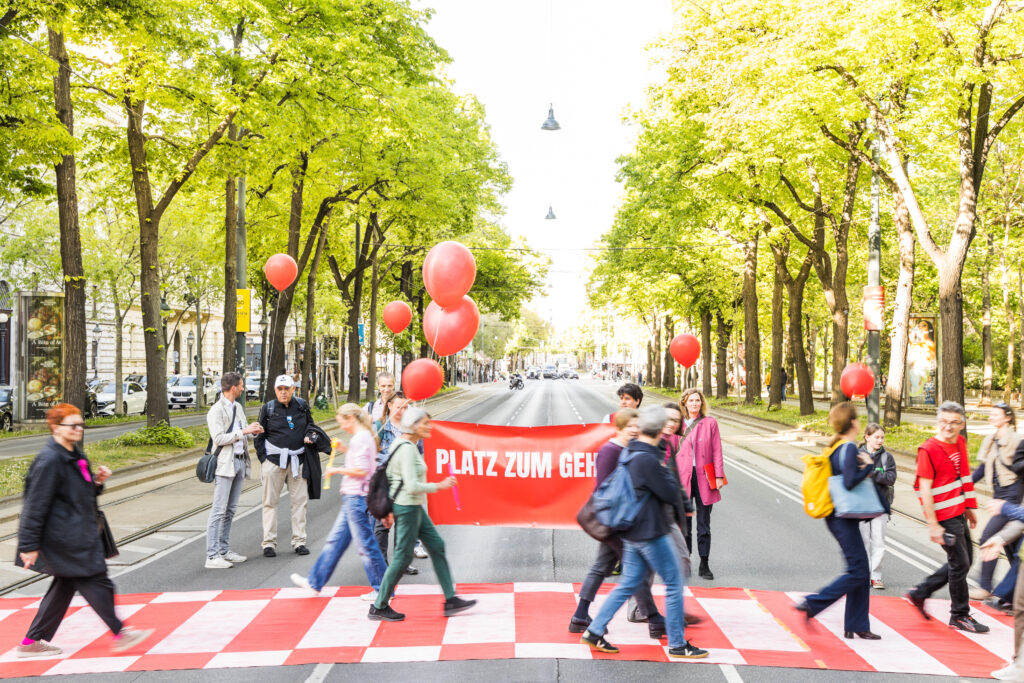
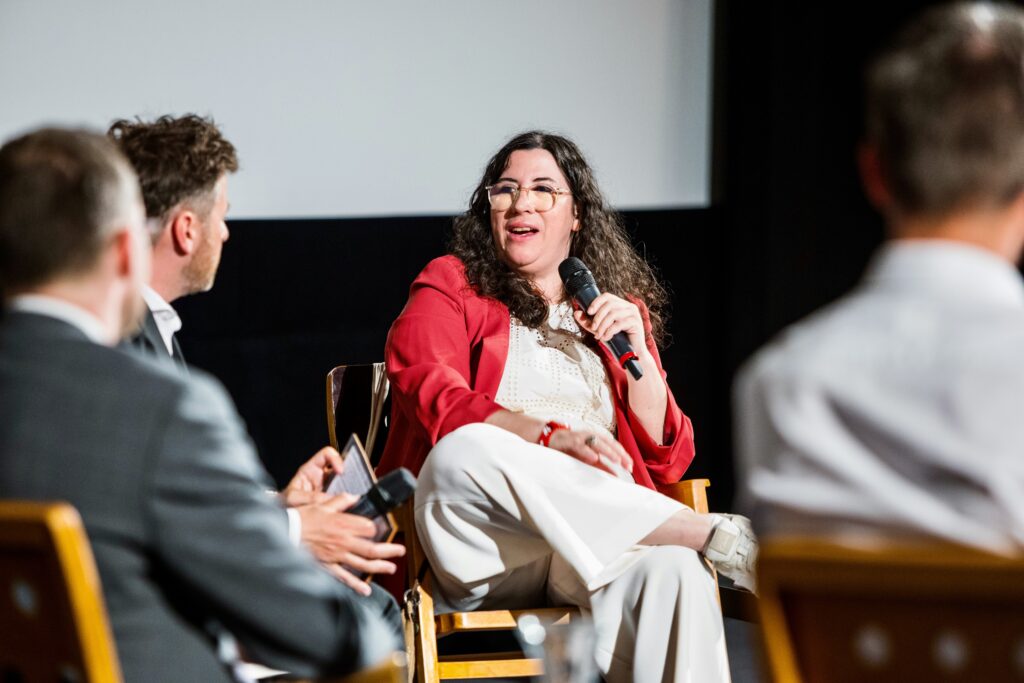
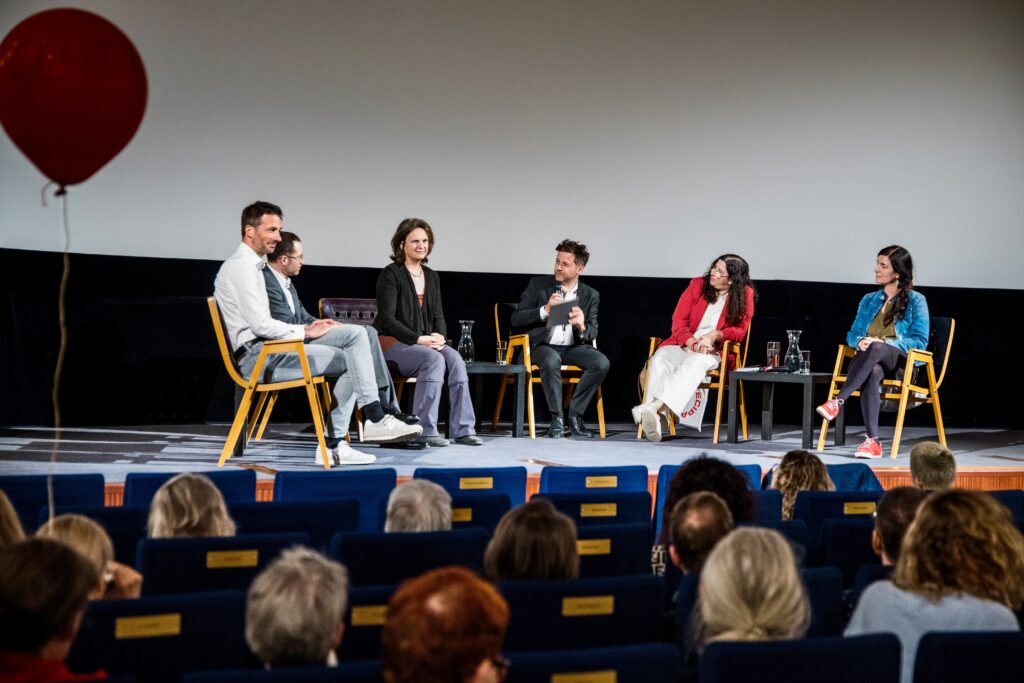
The festival kicked off on April 27 – International Walkers’ Day – with a panel discussion at the Gartenbaukino, organized by “Wien zu Fuß” from the Vienna Mobility Agency. The discussion focused on the planned redesign of Vienna’s Ringstrasse, which Cornelia Dlabaja discussed together with Julia Girardi-Hoog, Vienna’s Gender Commissioner, Petra Jens, Vienna’s Pedestrian Commissioner, Harald Frey from TU Vienna and Matthias Nagler from ÖAMTC.
It quickly became clear during the debate that urban planning is not just about traffic management, but about fundamental questions of urban quality of life.
Who is the planning for?
Cornelia Dlabaja brought a nuanced research perspective to the table and structured the discussion across several levels: the role of day-trippers – such as those on river cruises – who use the Ring as a transit space; the significance of transportation hubs like Schwedenplatz and their organization; and the question of wayfinding systems for different user groups. A central concern of the endowed professor was the issue of participation. Urban planning, according to her approach, should not be conducted exclusively from the top down. Rather, it requires active engagement from civil society.
This became particularly clear in her statement that pedestrians ultimately decide for themselves how they move through the city. Planning can create framework conditions, but usage is defined by the people themselves. This perspective ties in with the central principles of urban researcher Jane Jacobs, whose ideas shape the festival: the city emerges from the everyday lives of its residents.
Understanding the City on Foot
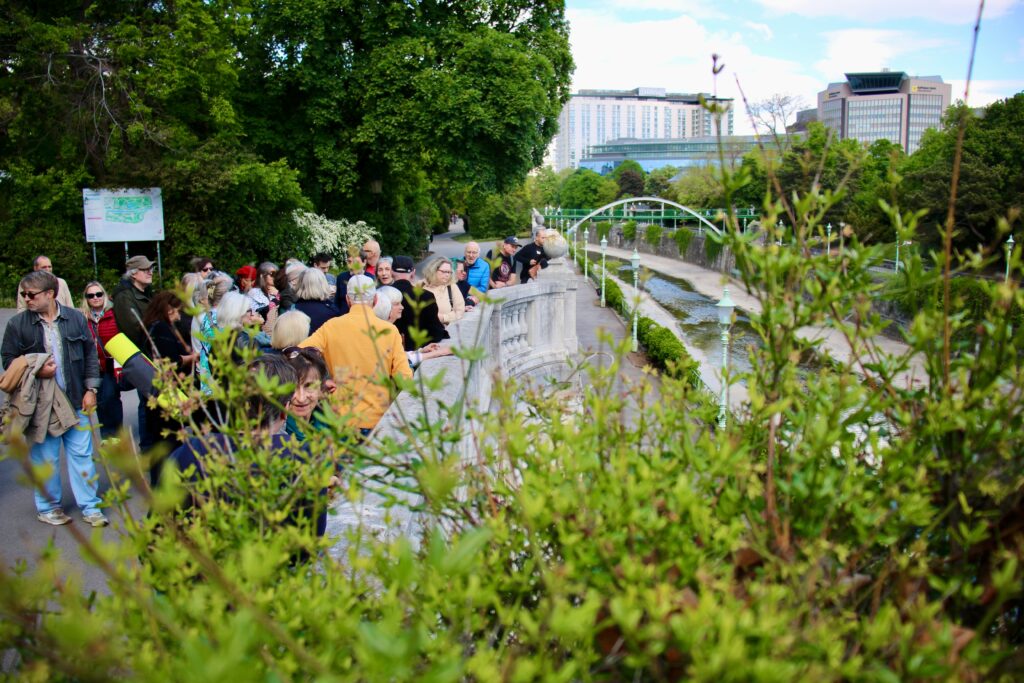
Following the successful launch at the Gartenbaukino, participants spent three days exploring Vienna: Nine walk leaders guided around 300 people through a wide variety of neighborhoods across the city in glorious weather – from Kaisermühlen to Margareten, from the Danube Canal to the old University of Economics campus at Althangrund.
Cornelia Dlabaja led a tour through the Spittelberg district, highlighting contested spaces that have shaped Vienna culturally and politically: from the Museumsquartier to the Amerlinghaus—where activists and local initiatives had their say—to the transformations and struggles over space along Burggasse. A walk that demonstrated how urban history is always, to a great extent, a history of negotiation and resistance.