Urban development concerns us all—especially if we live, work, and study in Vienna.
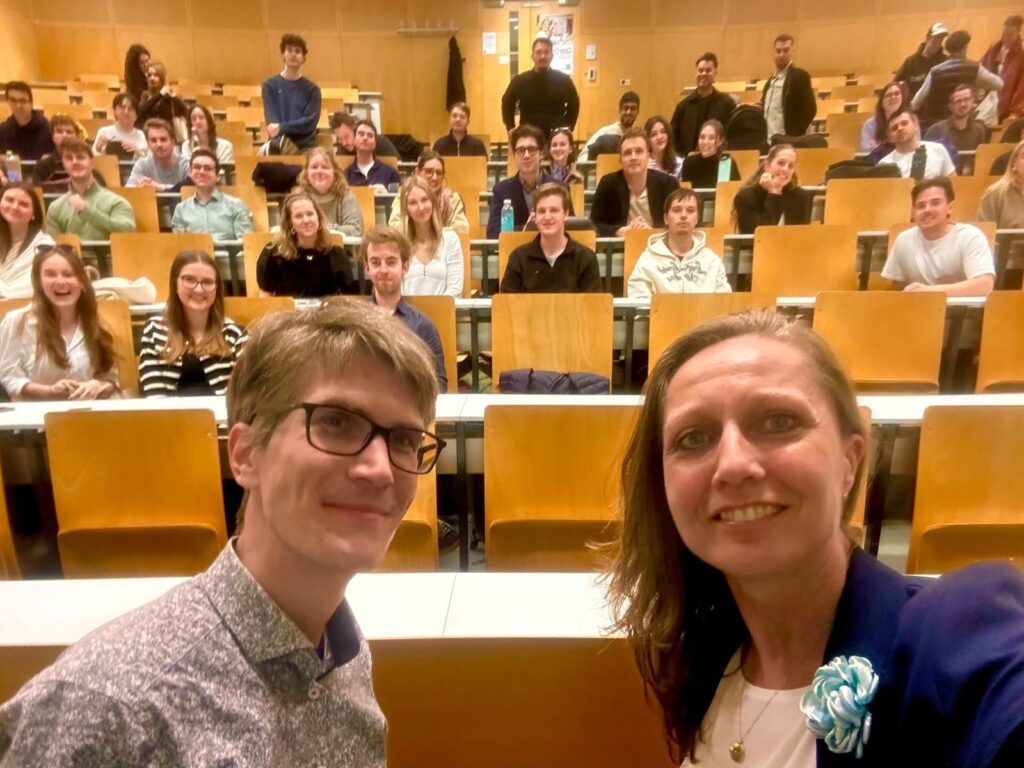
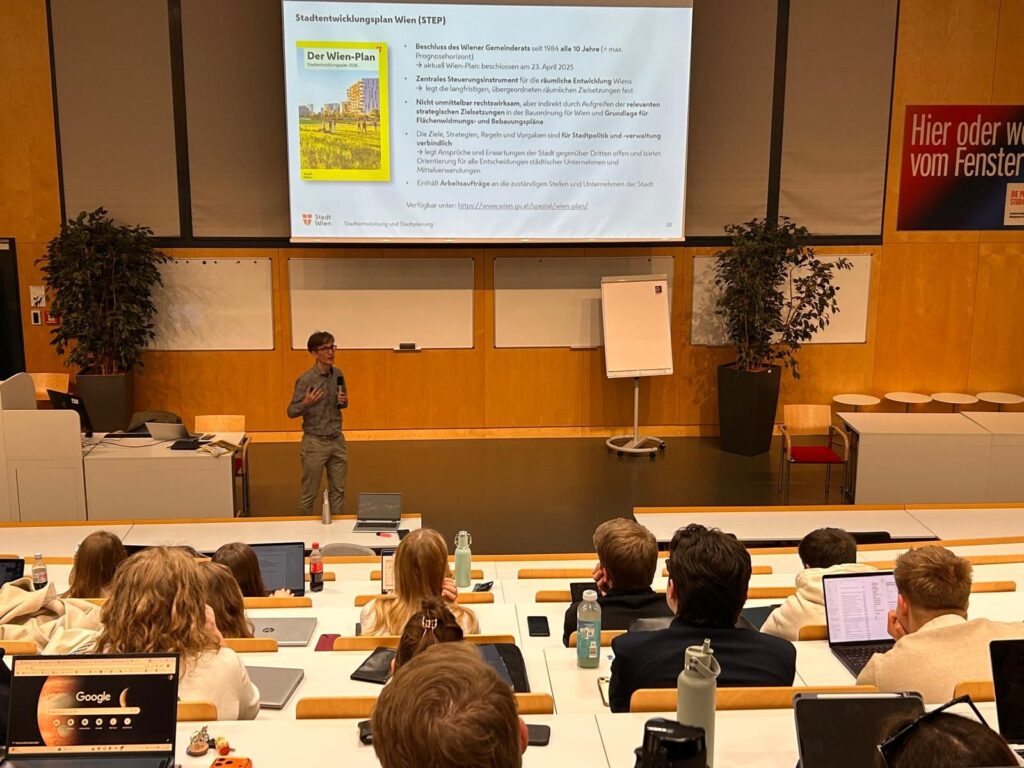
For this reason, Martina Zöbl, Academic Expert & Lecturer in the Management & Entrepreneurship study programs, invited Clemens Horak (Head of Urban Development and Urban Planning for the City of Vienna—MA 18) to give a lecture at FHWien der WKW as part of a lecture series.
For years, Vienna has been one of the cities with the highest quality of life in the world! Although it has slipped from first to second place in the “Global Liveability Ranking” according to the Mercer study and the British “Economist,” it is still a great privilege to be able to study, work, and live here.
So what does urban development and planning have to do with management and entrepreneurship? A lot, as we saw in that fascinating lecture!
In his presentation, Clemens Horak explained where the City of Vienna currently stands and what its plans for the future are.
He instilled in the students an understanding and awareness of:
- conflicting goals, stakeholder management, systemic interdependencies, and the responsibilities of public institutions.
- how management can be implemented when the areas of space, locality, mobility, energy, social justice, and the economy are inextricably linked.
- Climate protection is a must for every future decision—both in terms of urban planning and business.
It was also made clear that, due to restrictive budgets, long-term plans are unfortunately often implemented through compromise solutions that are rarely free of political, social, or local conflict.
Entrepreneurial Thinking in Urban Development?
The question is: Can and should companies plan with time horizons as long-term as those of cities? What compromises can be made, and what do the laws require?
In his presentation on the 2035 Urban Development Plan, Clemens Horak addressed several concurrent challenges, such as climate change, population growth, land-use pressure, and social transformation. He noted that successful measures implemented by other cities—such as those in Scandinavia—are often not directly transferable; rather, they offer principles that can serve as models.
In their reflections, students highlighted the aspects that make Vienna a livable city: “accessibility and infrastructure.” The discrepancy between the vision and lived reality becomes “palpable” when it comes to heat in urban spaces, rising housing costs, and conflicts over the use of public spaces.
A heartfelt thank you to Clemens Horak for his comprehensive and fact-based presentation, and to Martina Zöbl, who once again organized a lecture series well worth attending, providing interesting data and facts for discussion.
>> More information about the Management & Entrepreneurship study programs