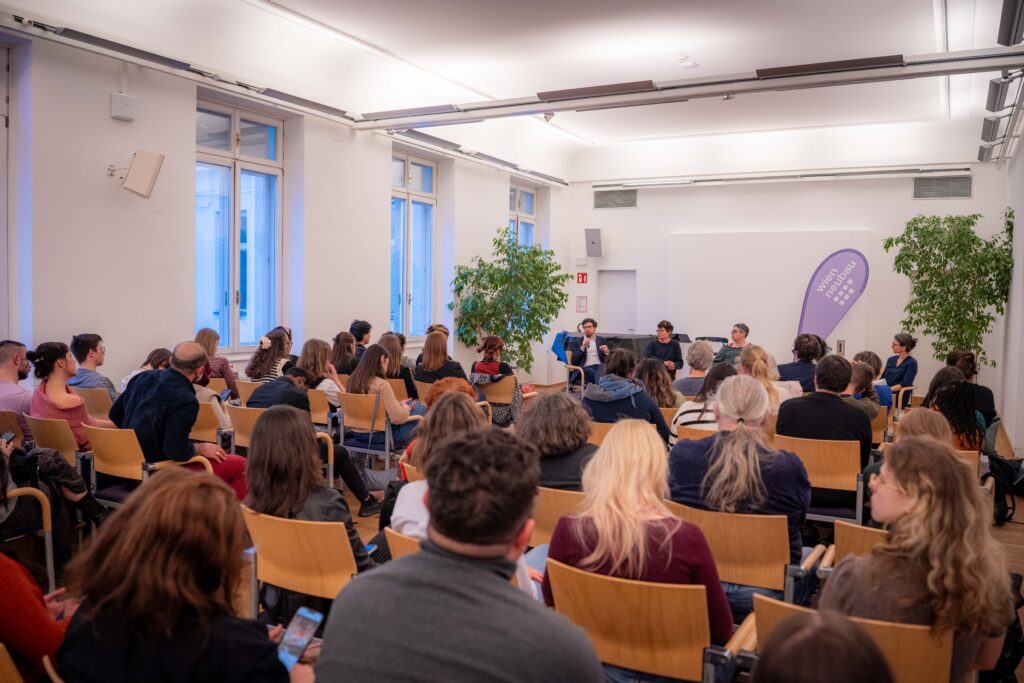
How are vacancy rates, tourism and short-term rentals changing our cities? This question was the focus of the 4th Urban Future Talk, organized by Endowed Professor Cornelia Dlabaja at the Neubau District Office on March 17, 2026.
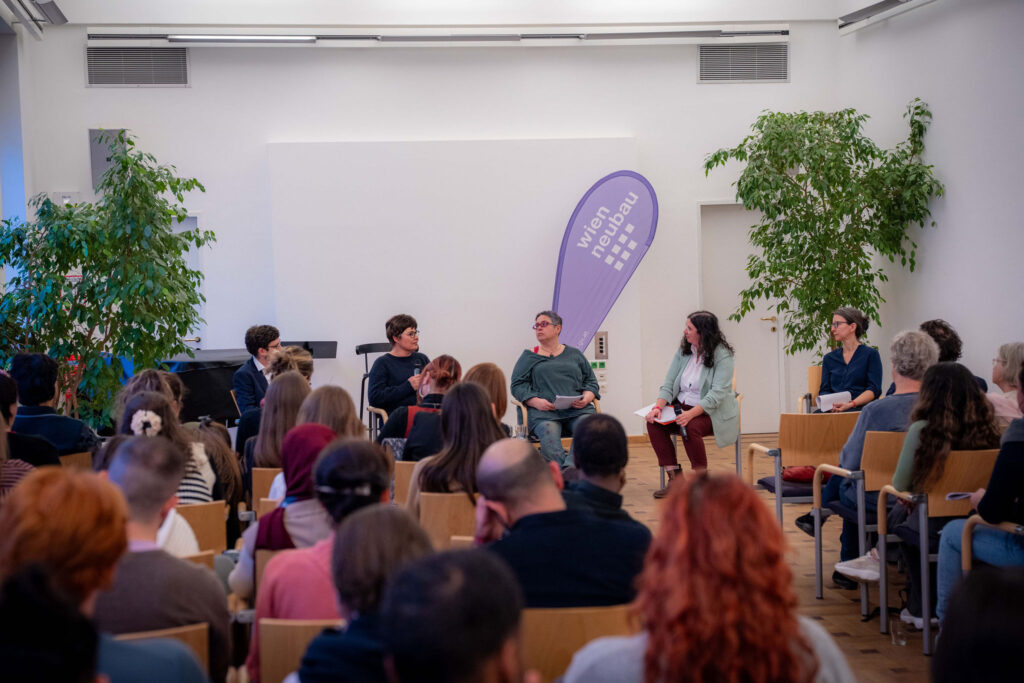
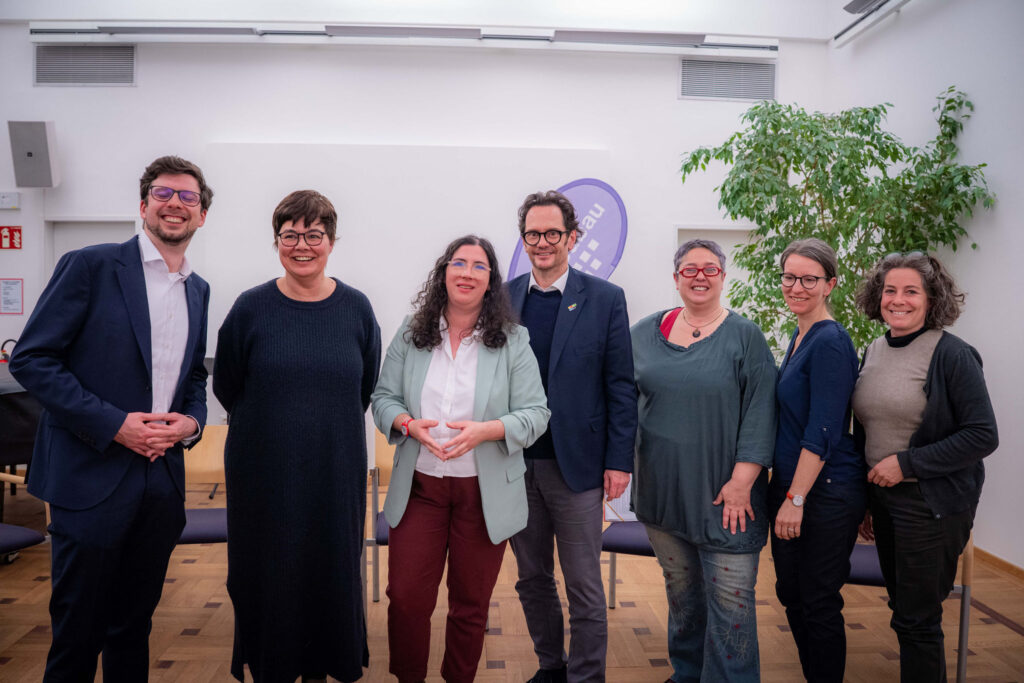
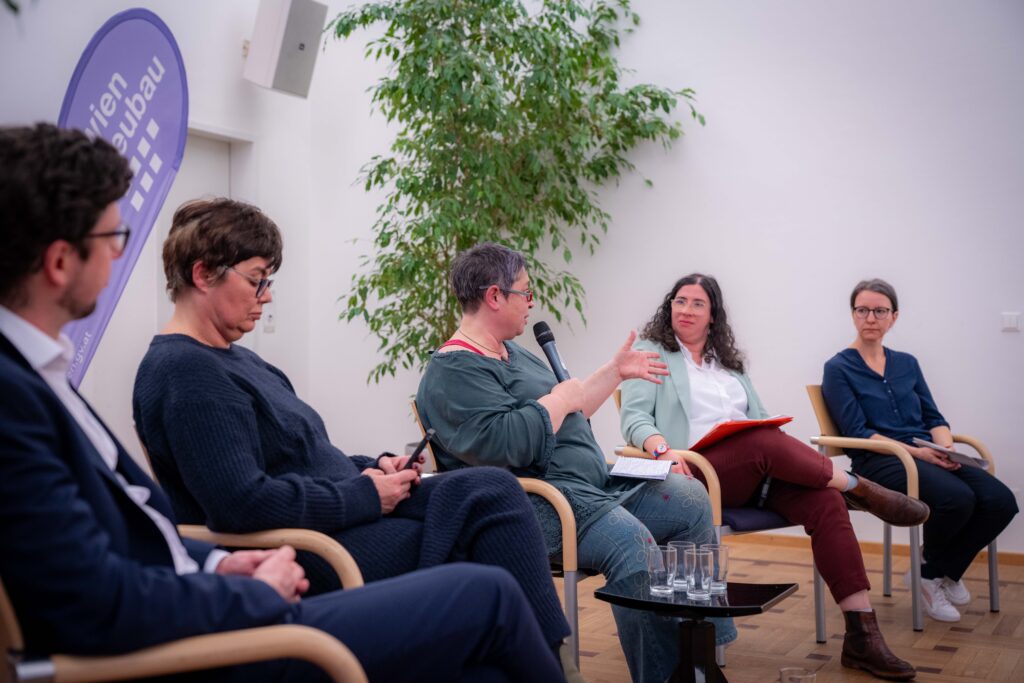
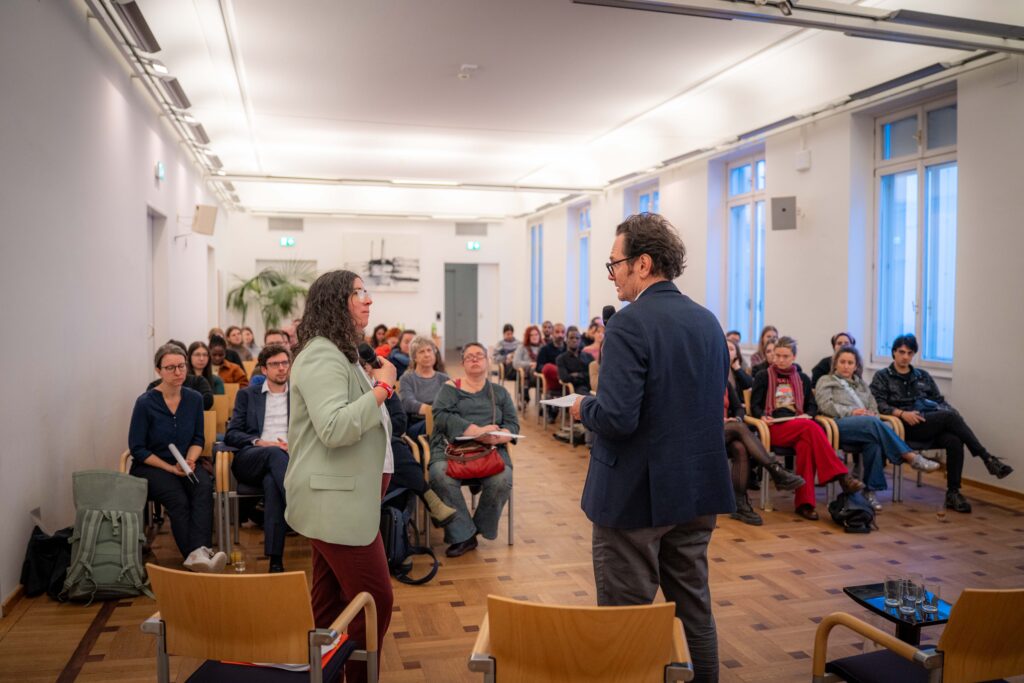
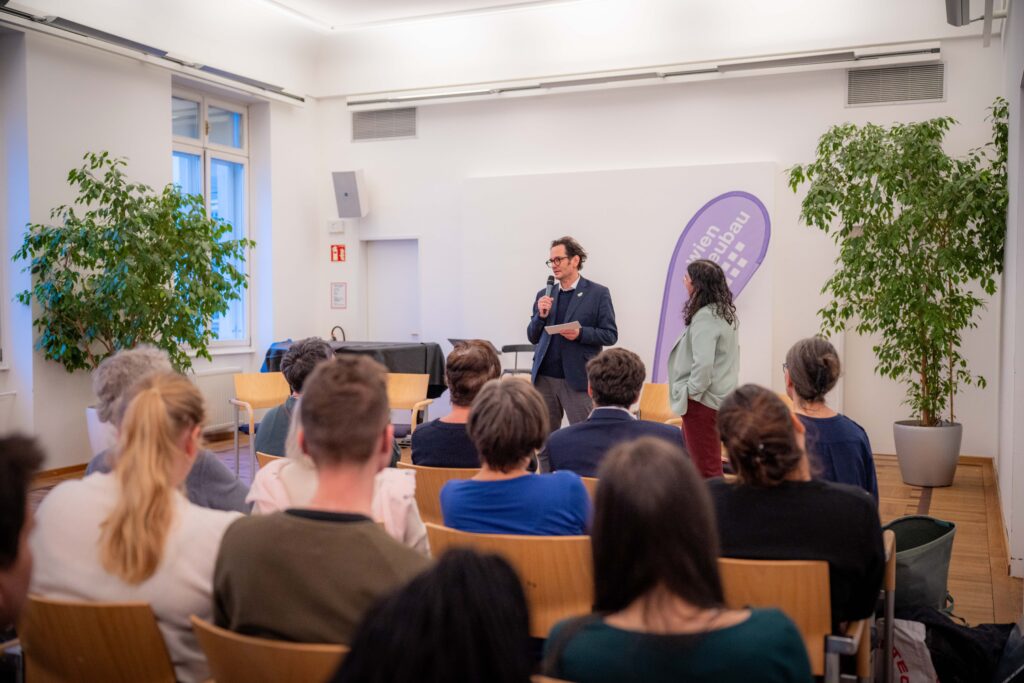
The following speakers were invited to discuss the topic: Cornelia Dlabaja (Endowed Chair for Sustainable Urban and Tourism Development, FHWien der WKW), Danelia Wagner (Academic Expert & Lecturer, FHWien der WKW), Alexandra Paio (Associate Professor, ISCTE Lisbon), Giovanna Marconi (UNESCO SSIMM Chair, Università Iuav di Venezia) and Silvio Heinze (Austrian Academy of Sciences, urban geographer). The event was welcomed and moderated by Markus Reiter, District Mayor of Vienna’s Neubau district.
Housing Shortage Due to Short-Term Rentals
A key issue was the growing shortage of housing. The 7th Vienna district, Neubau, was deliberately chosen as the venue because this district recorded over 100,000 overnight stays in 2024. At the same time, the district administration noted in 2025 that there were approximately 720 apartments listed on Airbnb, which corresponds to about 4.2 % of all apartments in the district.
This development affects not only the housing market but also social structures. Discussions focused on how neighborhoods are changing and what long-term consequences this has for urban coexistence. City officials emphasized that this is not a local phenomenon, but a Europe-wide one.
International Perspectives & Solutions
The research perspective also played a central role. Cornelia Dlabaja, professor of sustainable urban and tourism development at FHWien der WKW, brought international comparative data into the discussion. She noted that similar developments can be observed in many European cities and have been the subject of academic research for years. The goal is to learn from one another and develop joint solutions.
The discussion made it clear that short-term rentals go far beyond economic issues. It is about affordable housing, social diversity and the future of vibrant neighborhoods. The fourth Urban Future Talk thus provided an important impetus for dialogue between academia, politics and society and demonstrated how relevant interdisciplinary collaboration is for the city of the future.