How much responsibility does technology bear today—especially in times of AI and digitalization? This central question was the focus of the panel discussion at the BMFWF Science Talk on Monday, February 23, 2026.
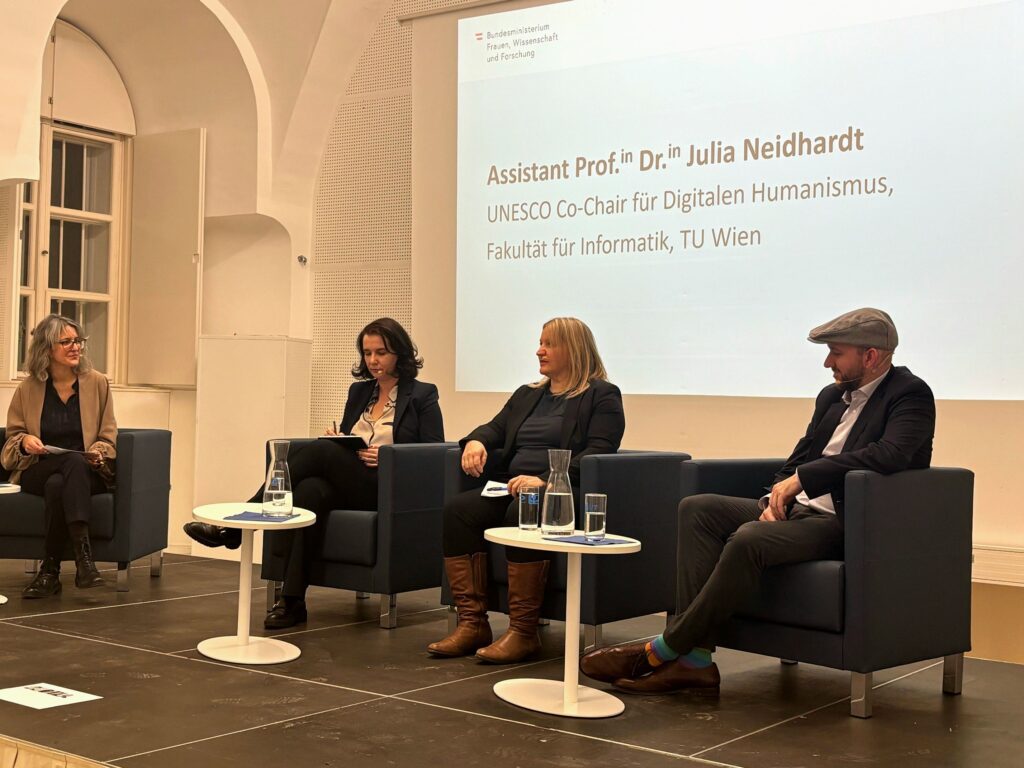
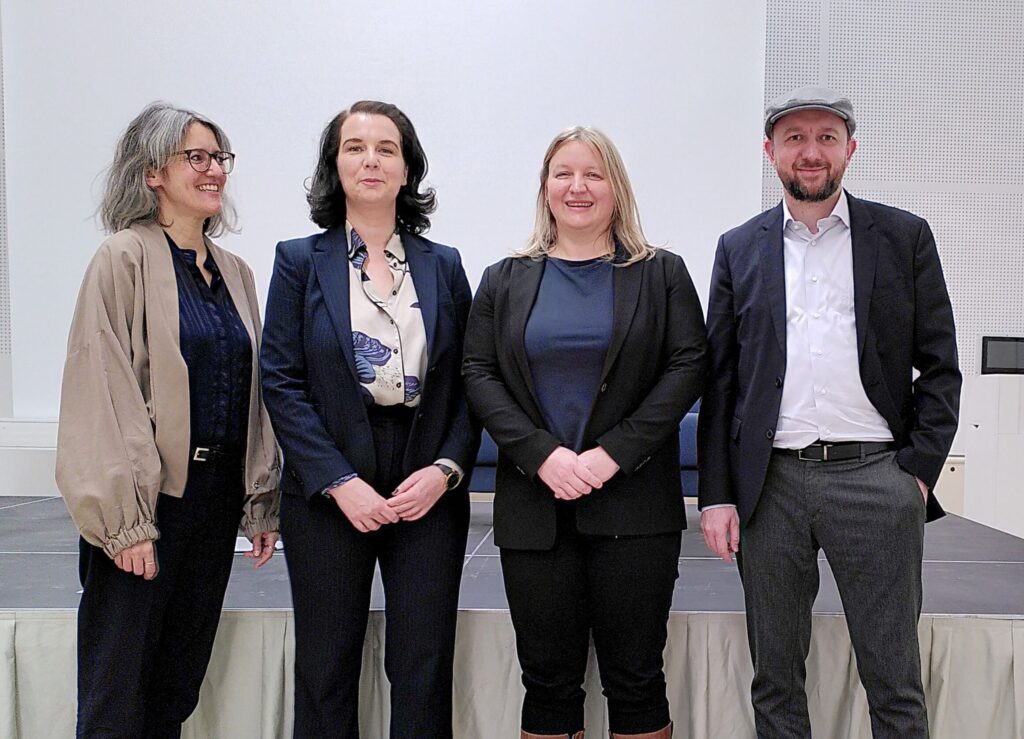
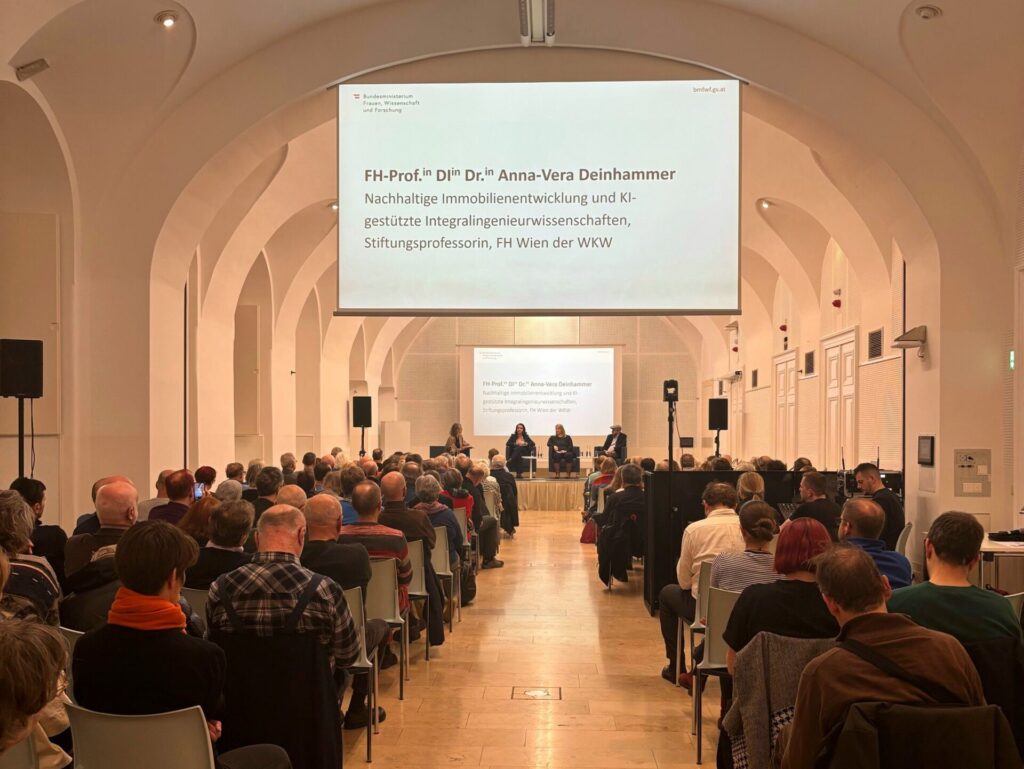
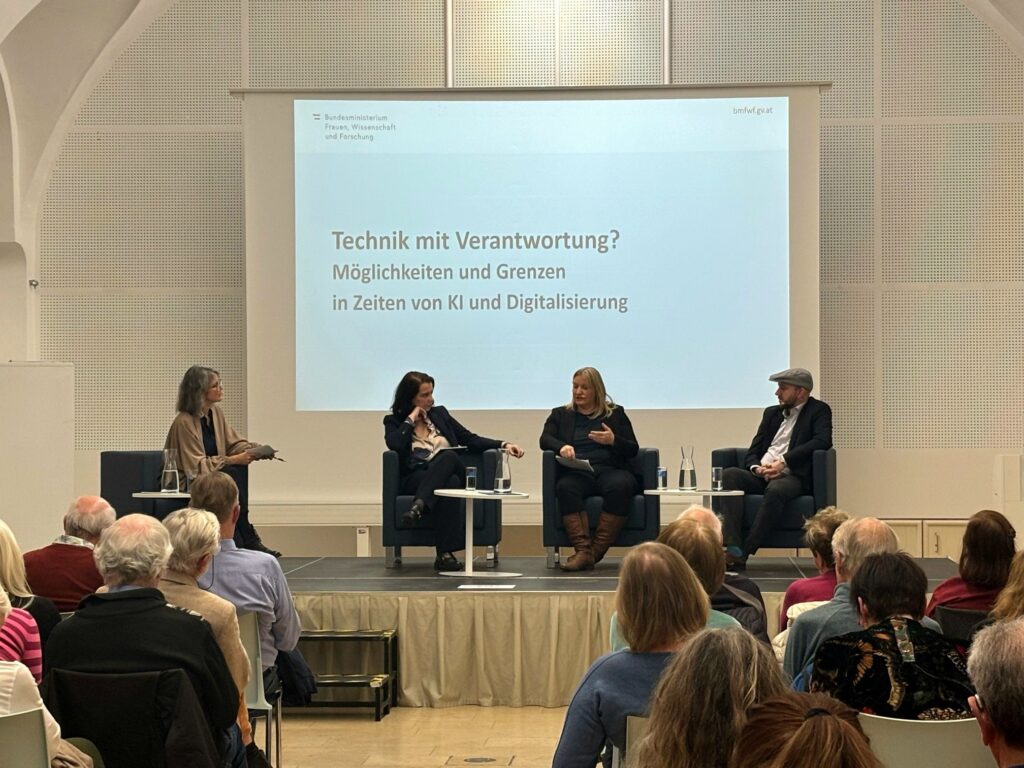
Endowed chair Anna-Vera Deinhammer was able to contribute her expertise as an integral engineer. Together with two other experts, they highlighted the challenges and opportunities arising from the connection between technology, ethics, and social responsibility.
Once a month, the BMFWF invites researchers to its free “Science Talk” event format to discuss current topics relevant to society. In February, Endowed Professor Anna-Vera Deinhammer took her place on the podium alongside Julia Neidhardt, UNESCO Co-Chair for Digital Humanism from the Faculty of Computer Science at TU Wien, and Ben Wagner, Professor of Human Rights and Democracy at the Interdisciplinary Transformation University Austria (IT:U) in Linz. The evening revolved around the big question: Technology with responsibility? Opportunities and limitations in the age of AI and digitalization.
While Neidhardt classified current developments in AI and agentic systems from the perspective of digital humanism and Wagner placed regulation, human rights, and digital sovereignty in a European context, Deinhammer contributed her practical perspective from the construction and real estate industry.
More perspectives, better decisions
Deinhammer focused in particular on the importance of integral engineering. Her approach combines technical feasibility with economic conditions, ecological objectives, and social expectations. Conflicts of interest can quickly arise, especially in the construction and Real Estate sectors. Those who consider multiple perspectives can identify these conflicts early on and make more informed decisions.
She agreed with her fellow panelists that technology alone is not enough. Sustainable solutions arise where technology, business, and society interact.
CO₂ reduction in existing buildings: No transformation without data
Deinhammer was particularly specific on existing buildings: Anyone who wants to reduce CO₂ emissions over the entire life cycle of a building needs a reliable basis for decision-making. This includes, above all, consumption data over a period of ten to fifteen years. This data shows how buildings develop, how they react to climatic changes, and where potential lies.
Deinhammer also touched on a sensitive issue: data enables progress, but it also raises questions. As soon as data is available at the address level, new conclusions can be drawn. That is why we need a societal discussion about transparency, protection, and purpose limitation.
The central question is: How much trust do we allow—and how much trust does sustainable planning require?
Regulation as a framework, not a brake
The discussion made it clear that regulation does not automatically inhibit innovation. It creates clear rules and increases legal certainty – it is absolutely necessary. Ben Wagner emphasized that although European data storage incurs costs, in the long term it strengthens independence and reduces security risks.
Responsibility as an educational mission
All three experts also agreed that the consequences of technology, ethical issues, and interdisciplinary thinking must be anchored early on in education and university studies. Technology is never neutral. It has an impact on social, political, and economic systems.
This is precisely where FHWien der WKW comes in with Anna-Vera Deinhammer’s endowed chair: research and teaching combine technical expertise with sustainability, digitalization, and social responsibility.