At the book presentation of the anthology “Raum – Theorie – Empirie” (Space – Theory – Empiricism) by editors Cornelia Dlabaja and Sarah Nimführ at FHWien der WKW, it became clear why space is not only geographically relevant, but also socially and politically relevant.
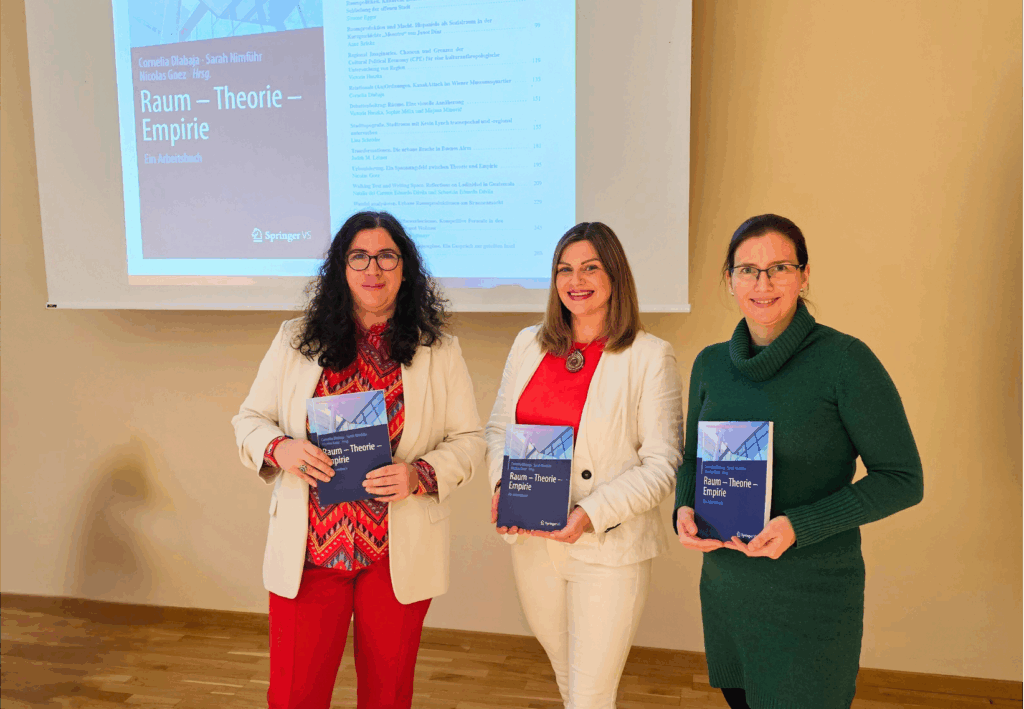
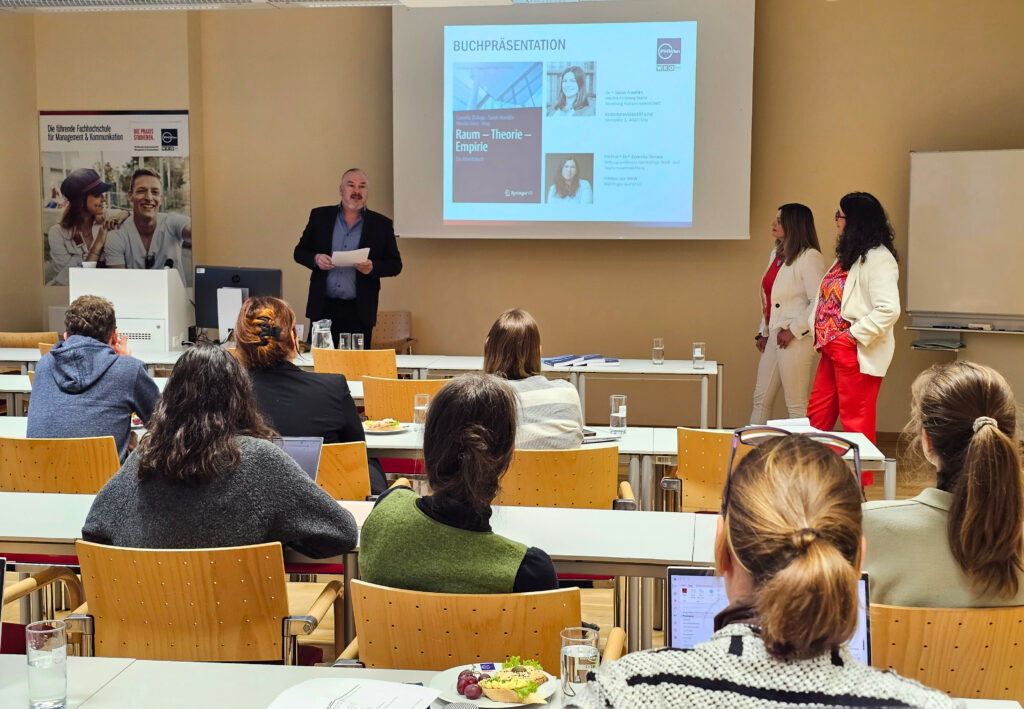
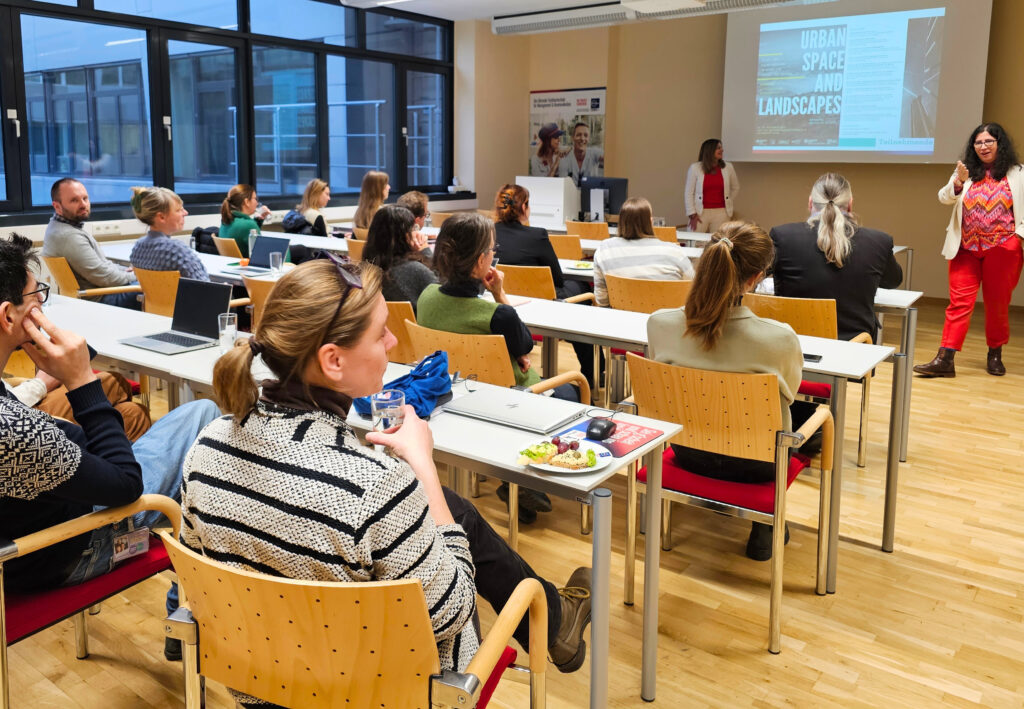
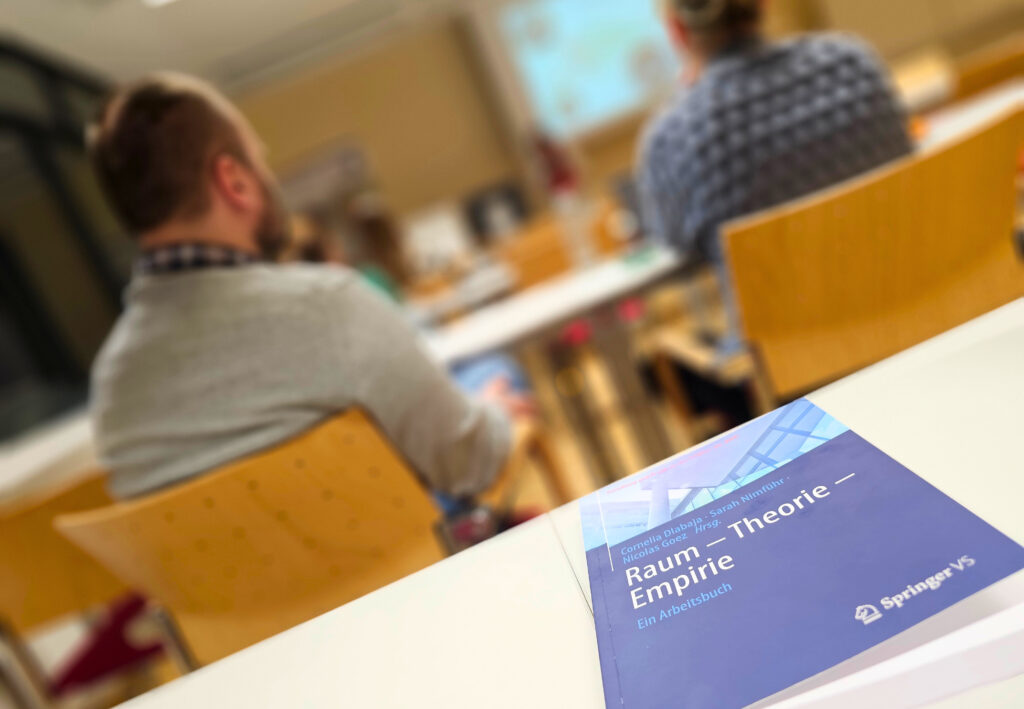
For the second time, the “Science Sq2uare” event series offered participants the opportunity to experience science through conversation. The joint exchange led to new insights, perspectives and questions that often seem obvious to us in everyday life. This is because the focus was on a topic that may seem abstract at first glance, but which affects us all directly: space.
Space as a physical, social, symbolic and emotional concept
As emphasized in the presentation, spaces are not simply “there.” They are socially produced by actors who are equipped with different resources in decision-making processes. They arise on the level of perception through memories and in everyday practices. They are constantly changing. Space therefore has not only a material-physical aspect, but also a social, symbolic aspect.
After a welcome by host Marian Adolf, Cornelia Dlabaja explained the origins of the book project and the relevant theoretical approaches of the anthology. Sarah Nimführ gave an overview of the structure, contributions and authors of the book, whose research perspectives became particularly apparent in the contributions presented by the editors.
Islands of Memory – Spaces as Zones of Encounter and Conflict
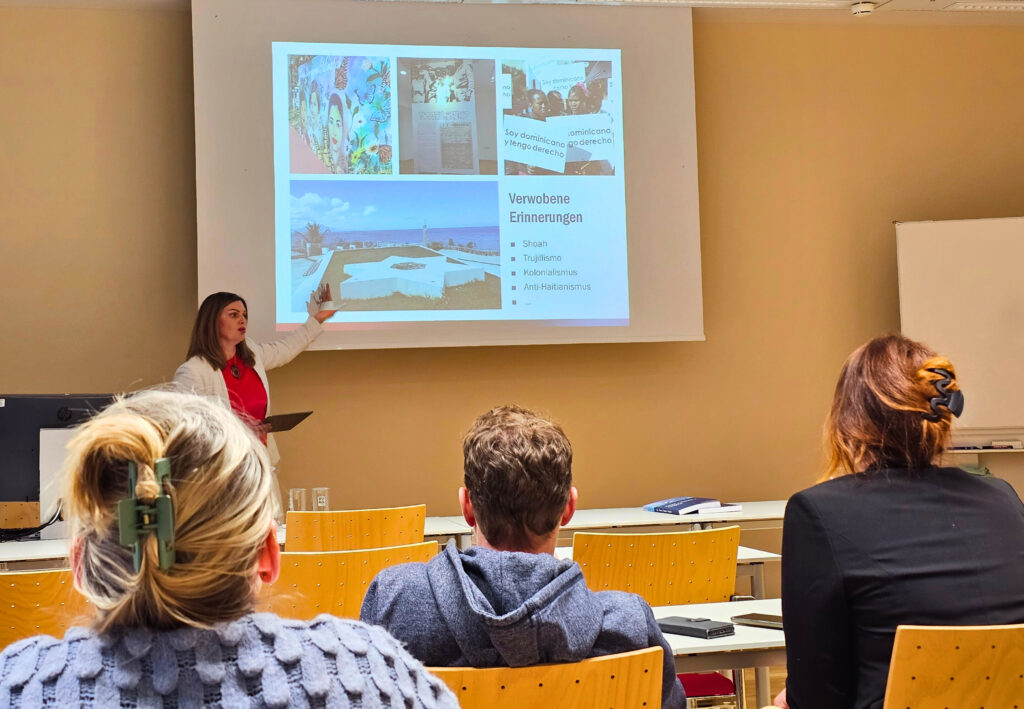
Sarah Nimführ used the concept of “archipelagic memory” to show that memory is not anchored in a single place, but moves across generations and spaces. According to this concept, spaces of memory in the Jewish diaspora in the Caribbean are interwoven across islands, generations and national borders. She developed an archipelagic way of thinking that understands history as fragmentary, relational and in flux, thus opening up new approaches to memory and belonging.
Cornelia Dlabaja used the artistic intervention “KanakAttack” on the façade of the Kunsthalle Wien in Vienna’s Museumsquartier to show how places can be symbolically reinterpreted. The same installation, which was a welcome photo opportunity for Turkish wedding couples in Berlin, was instrumentalized by the media and political parties in Vienna. Thus, spaces are produced through perceptions and social negotiations.
Space as a tool for research and discussion
In the ensuing discussion with the interested audience—including author Ana Rogojanu—the space was further defined as a space of competition and a tool for research. It became clear that those who understand space not as a backdrop but as the result of social processes gain a new perspective on their own environment. This applies to political discussions about the cityscape as well as to the idealized representation of islands as places of longing or the ongoing gentrification of neighborhoods.