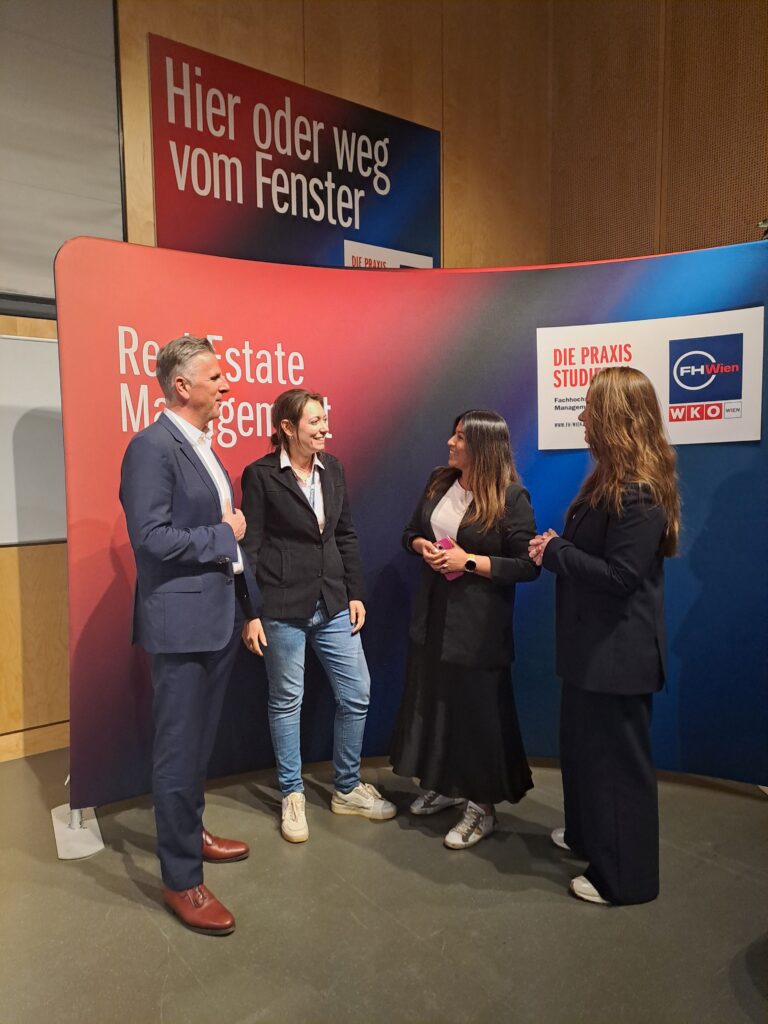
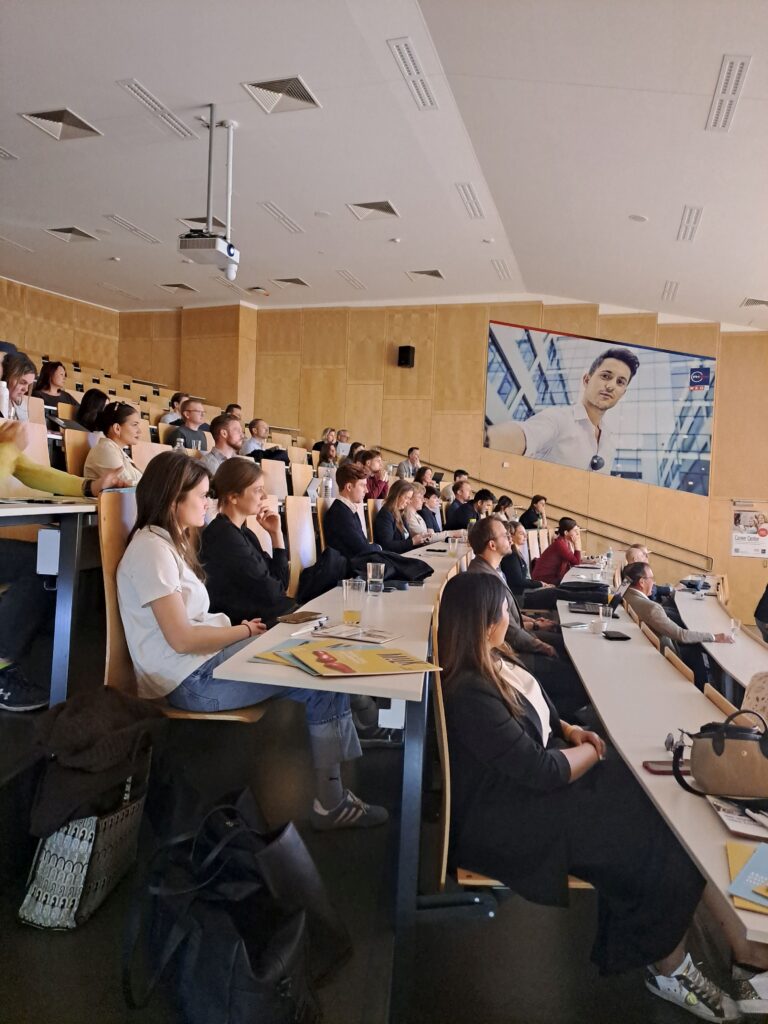
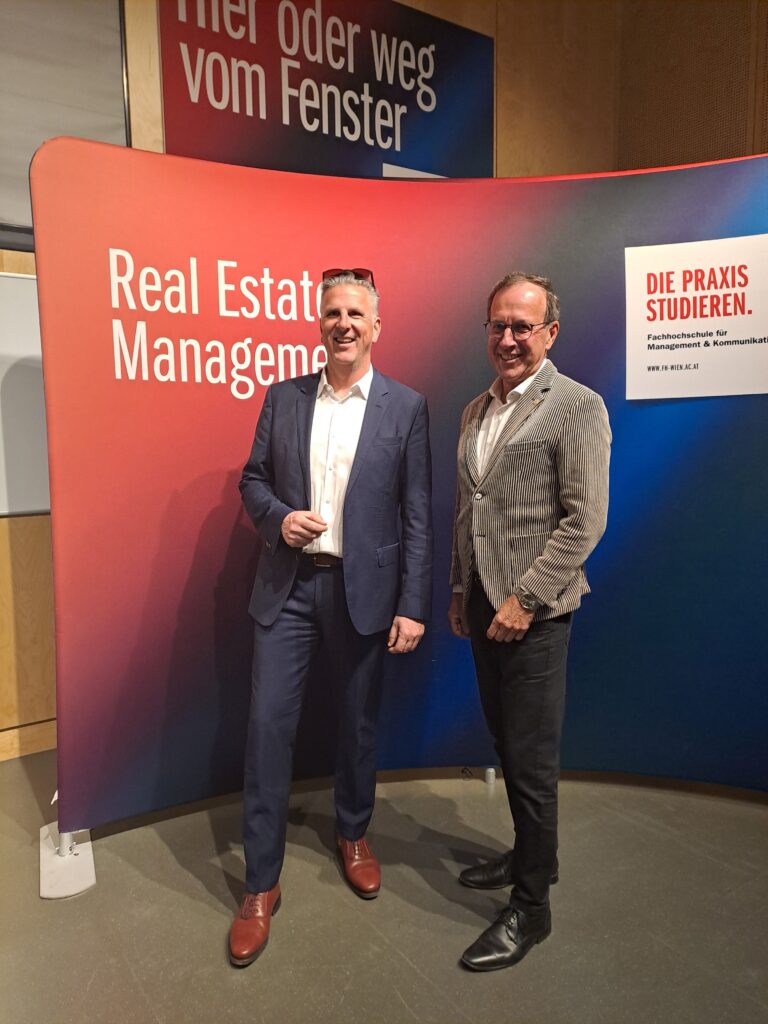
As part of the “Meet the Expert” series, the Real Estate Management Study Programs welcomed experienced communications professional Ernst Eichinger on Friday, April 24, 2026. Despite the sunny spring weather, over 50 students and interested attendees accepted the invitation to gain insights into more than three decades of communications in the real estate industry.
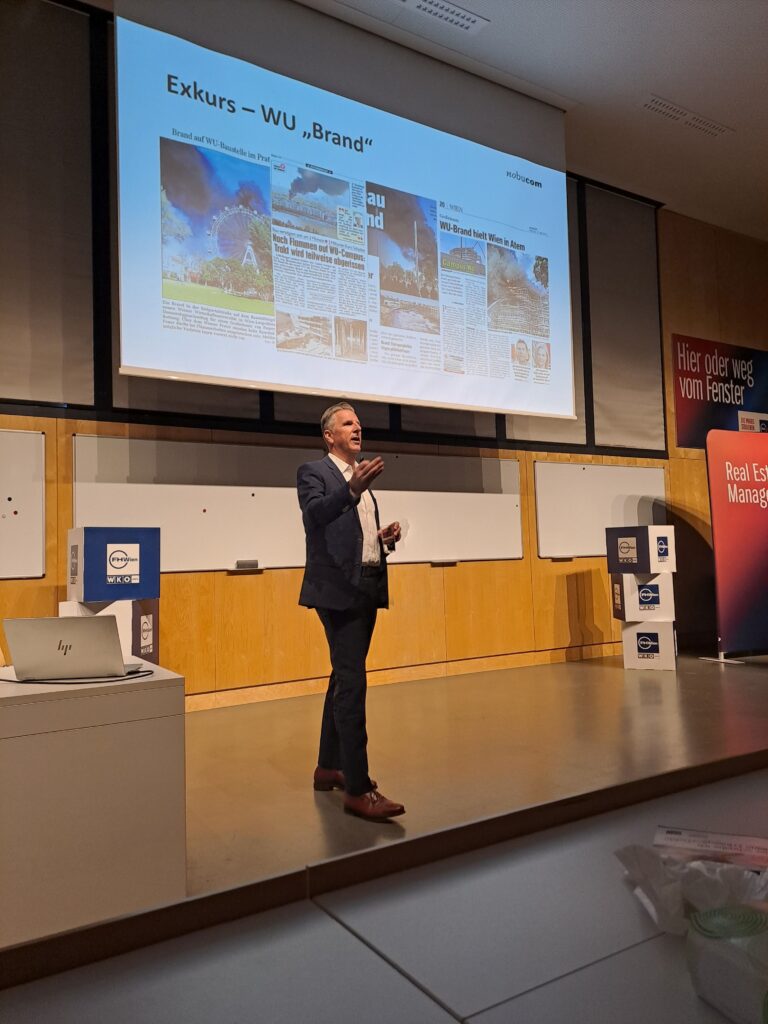
Eichinger, who has worked for the Federal Real Estate Company (BIG) and SIGNA, among others, and is currently a partner at the Nobucom agency, brought extensive practical experience to the event. The central role of professional communication is particularly evident in challenging situations, such as citizens’ initiatives, environmental impact assessment procedures, or socio-political conflicts.
“Culture of Excitement”
A central theme of his presentation was the changing communications landscape, characterized by speed, constant public scrutiny, and increasing unpredictability. Social media and smartphones have not only altered attention spans but have also fundamentally transformed the media market. Traditional media are losing their significance, while at the same time the pressure for transparency — including on private companies — is growing.
Added to this are increasingly demanding stakeholders: local residents, politicians, business leaders, and the media expect active engagement and comprehensive information. At the same time, basic trust is declining, which further complicates communication efforts.
Preparation as a Key Factor for Success
Using specific projects as examples, Eichinger demonstrated how essential structured preparation is. This includes a systematic analysis of all relevant stakeholders as well as an assessment of potential conflicts. Using the “Korneuburg Shipyard” project as an example, he illustrated how up to 400 individuals and groups involved must be taken into account.
Building on this, communication strategies are developed, messages are defined, and possible scenarios are run through to ensure a quick and appropriate response in an emergency.
Focus on Trust and Responsibility
A key takeaway from the presentation: Trust is built through consistent behavior over a long period of time — and can be lost in the blink of an eye. Equally important is accountability: Decisions must not only be made, but also communicated transparently and defended.
The example of the “Kaufhaus Lamarr” project clearly demonstrated how complex communication processes are in politically sensitive projects that are under intense public scrutiny. Measures such as targeted interim uses or the establishment of an ombudsman’s office helped build trust and strengthen dialogue with the public.
When Communication Breaks Down
Particularly interesting were the real-world examples where communication broke down. For instance, a misjudgment of the situation during the sale of mountain land in Tyrol led to negative international media coverage.
Other projects — such as those in Korneuburg or at the Vienna University of Economics and Business — have also shown how quickly dynamics can change when communication is poorly planned or executed.
Eichinger’s message: People want to be heard and understood. Open communication, a willingness to engage in dialogue, and a genuine interest in the concerns of all stakeholders are crucial to a project’s success.
Communication is Key
In his examples, Ernst Eichinger vividly illustrated just how complex, and at the same time crucial, communication is in the real estate industry. The event offered valuable insights into the realities of the industry, particularly for students and aspiring professionals, and demonstrated that successful projects require far more than just technical and financial planning: above all, they require effective communication.
>> More information about the Real Estate Management Study Programs