In the winter semester of 2025/26, the “Responsible Management Lectures: Ideas for Better Business” at FHWien der WKW focused on one of the central future issues of our time: the ethics of artificial intelligence (AI).
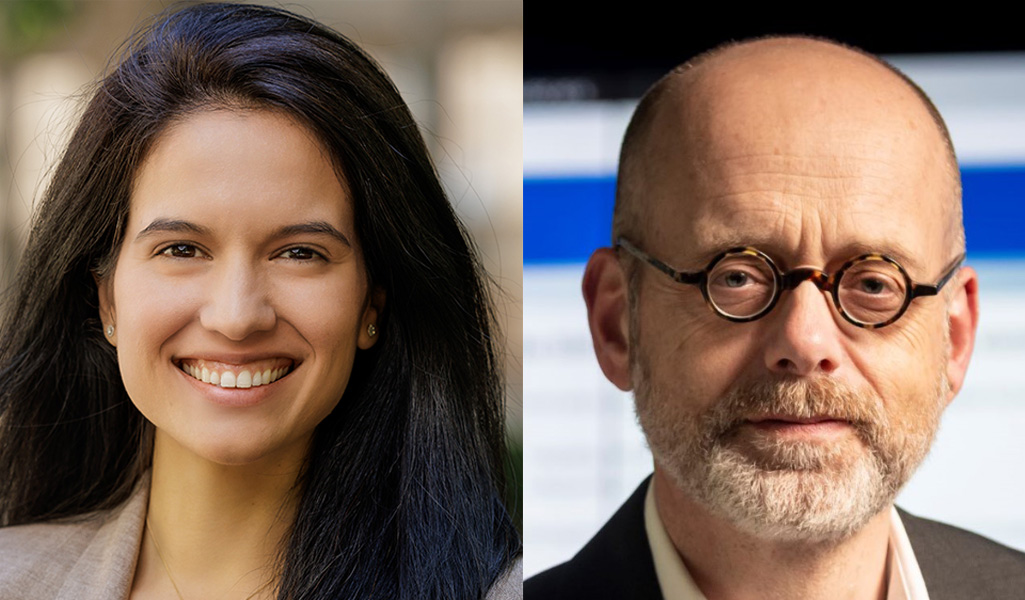
Under the title “Ethics of Artificial Intelligence”, two internationally renowned experts shed light on how AI is changing business decisions, social responsibility and human behavior, and what ethical questions arise as a result.
AI and moral distance: When decisions lose their human touch
Dr. Carolina Villegas-Galaviz from Fordham University (USA) kicked things off on November 12, 2025, with her presentation “Artificial Intelligence and Moral Distance.” Based on economic ethical and philosophical approaches, she showed how the use of AI in organizations can lead to a growing moral distance between decision-makers and the people affected by decisions.
Moral distance arises when decisions are spatially, temporally, culturally or organizationally decoupled from their consequences. AI systems can amplify this effect, for example when algorithmic evaluations or automated decisions replace personal encounters and responsibility is outsourced to technical systems. Practical examples such as algorithmic human resources management or performance evaluation clearly showed how easily context and individual circumstances can be lost sight of.
Therefore, Dr. Villegas-Galaviz advocated for an ethics of care: instead of answering moral questions exclusively through rules, principles or efficiency, a relational view of dependencies, and the voices of those affected by AI systems is necessary. This is particularly crucial in a business context to enable responsible decisions.
AI for human flourishing: An ecosystem perspective on responsibility
The second lecture this semester was given by Prof. Bernd Stahl from the University of Nottingham (UK) on November 19, 2025. In his lecture entitled “Artificial Intelligence for a Better Future: An Ecosystem Perspective on the Ethics of AI and Emerging Digital Technologies,” he focused on AI as a socio-technical ecosystem.
Instead of viewing AI as a technology in isolation, Prof. Stahl described it as the result of complex interactions between developers, organizations, users, politics, regulation and civil society. Responsibility is therefore not centralized but distributed and must/can be actively shaped. A “good” AI ecosystem should promote human flourishing, i.e., create conditions under which people can develop their abilities individually and socially.
To achieve this goal, a mix of technical, organizational, legal and educational policy measures is necessary: from “ethics by design” to clear responsibilities and AI impact assessments to regulation, standards and training and continuing education. Prof. Stahl made it clear that many ethical challenges are not entirely new but are gaining momentum and scope through AI.
„Responsible Management Lectures: Ideas for Better Business“
The Responsible Management Lectures (formerly “CGBE Lectures”), which began in 2012, have become an important part of teaching in the areas of business ethics, sustainability and corporate management. Each semester, leading international experts from academia and industry present their perspectives on topics in these areas and discuss them with the audience.
>> Learn more about Responsible Management Education at FHWien der WKW