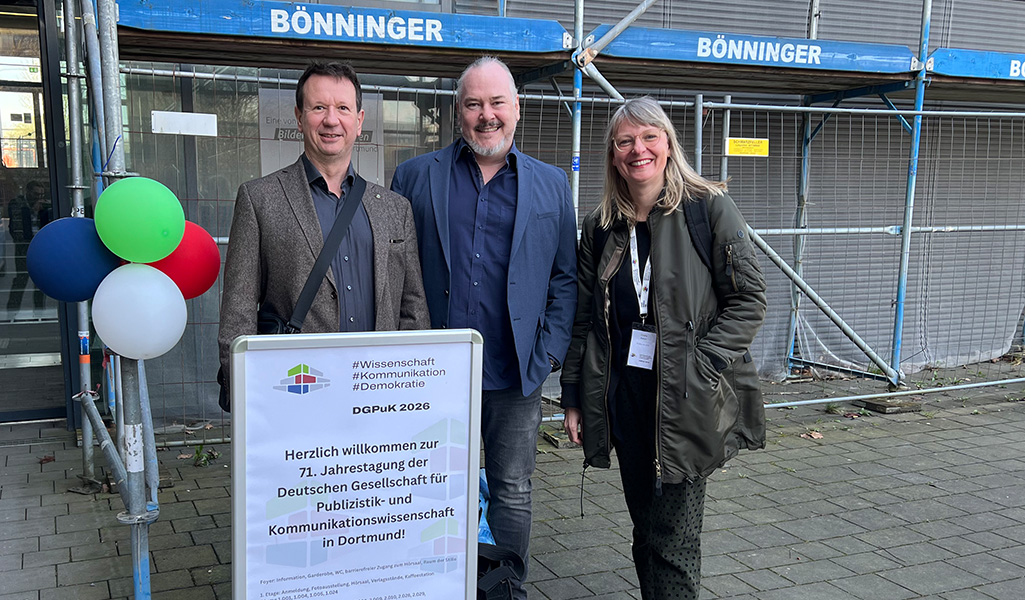
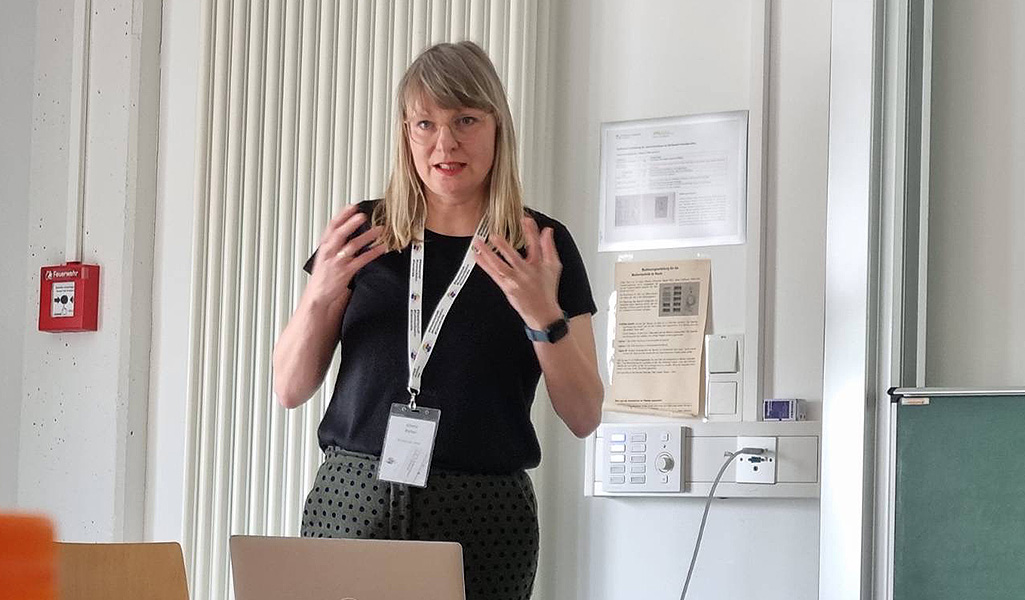
In March, German-speaking communication researchers gathered at TU Dortmund University for the annual conference of the German Society for Journalism and Communication Studies (DGPuK). Gisela Reiter, Marian Adolf and Andreas Hess from the Department of Communication presented the findings of a recent study titled “I Do My Own Research.” This study examined the ways in which young users differentiate between journalistic and journalism-like media offerings.


Research shows that, although traditional journalism continues to play a major role for young users, it is not their only source of information. Most respondents encounter news in the places they already spend time, such as social media platforms like Instagram or TikTok. Content from well-known media outlets such as “Der Standard” or ORF appears directly in their timelines. For many, these short, freely accessible posts provide enough information to gain an overview of current events.
However, when it comes to topics that are important to them personally, they dig deeper. ‘I do my own research’ sums up the attitude of many respondents. They compare different sources, combining journalistic content with alternative accounts and ensuring they include different perspectives.
Journalism remains important—but the environment is getting more diverse
This is less about a lack of trust in journalism and more about a desire for diversity. In the eyes of young users, traditional media now sits alongside many other sources of information, rather than above them. Journalists are expected to verify information carefully and provide context. Influencers, on the other hand, are evaluated based on different criteria; here, personal stance and approachability often count for more than traditional quality standards.
Based on an analysis of 48 qualitative interviews, the researchers identified three user types with different strategies for verifying relevant content.
- Traditionally informed individuals, who rely on public and established media brands,
- Network-informed individuals, who place great trust in the opinions of others, consult friends when encountering questionable content and pay close attention to online comments,
- Independently informed individuals, who verify content using search engines and make decisions based on common sense and intuition. However, this practice carries risks.
In conclusion, the study clearly shows that young people today move seamlessly between different sources of information. While journalism remains important, it must now compete in a significantly more diverse environment than just a few years ago.