Multimodal learning analytics can combine usage data, eye-tracking, and AI-powered dialogs to better understand digital learning experiences.

How do students experience digital learning offerings, and what role do motivation, emotions, and cognitive load play during the learning process? These are the questions being addressed by the MA23-funded “Bridging Courses in Research Skills & Methods” competence team at FHWien der WKW. As part of the project, the team is examining students’ learning experiences with the self-study modules of the “Master Propaedeutics – Bridging Courses in Research Skills & Methods” project.
Multimodal learning analytics open up new perspectives
To date, learning analytics have relied primarily on observable behavior, such as click paths, completion times, or quiz results. While this data shows what students do, it provides only limited insight into how they experience learning. Cognitive, emotional, and motivational processes, in particular, often remain hidden.
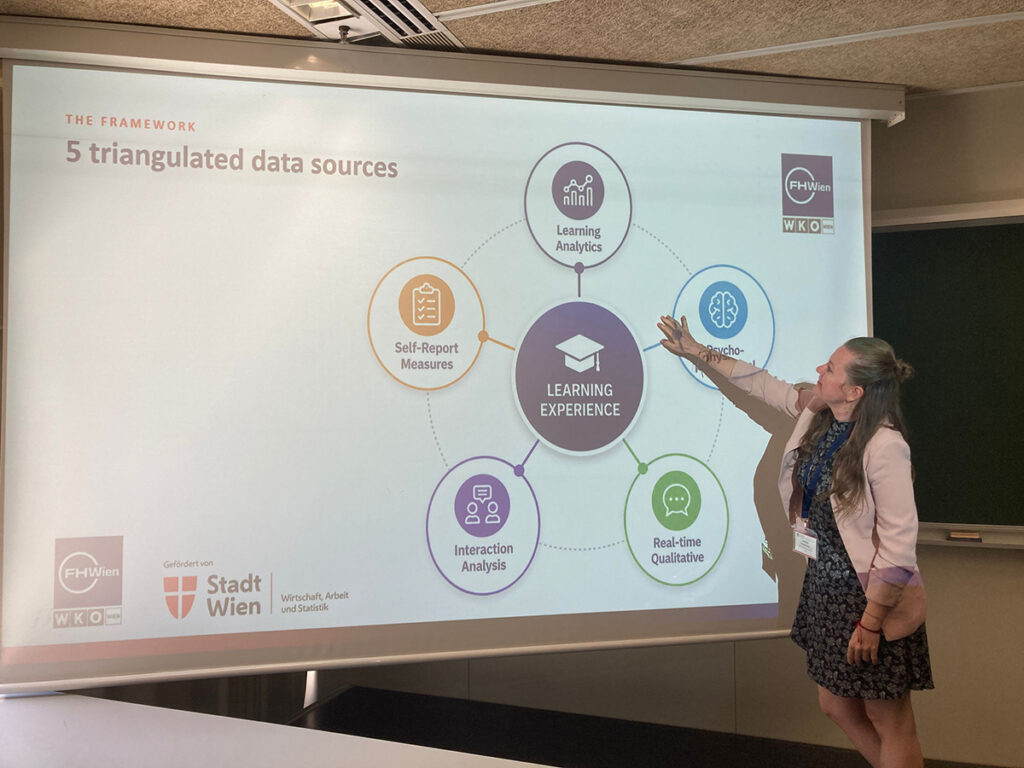
To bridge this gap, the research team developed a multimodal research approach that combines traditional learning analytics with other methods, such as eye tracking, think-aloud protocols, analysis of dialogs with AI tutors, and quantitative student surveys. By linking this data, it is possible to understand how learners perceive digital learning offerings, where they need support, and which factors promote successful learning processes.
The goal is to gain a better understanding of digital learning processes, to further develop them on this basis in an evidence-based manner, and to align them even more closely with students’ actual needs in the future.
Research Approach Presented at an International Conference
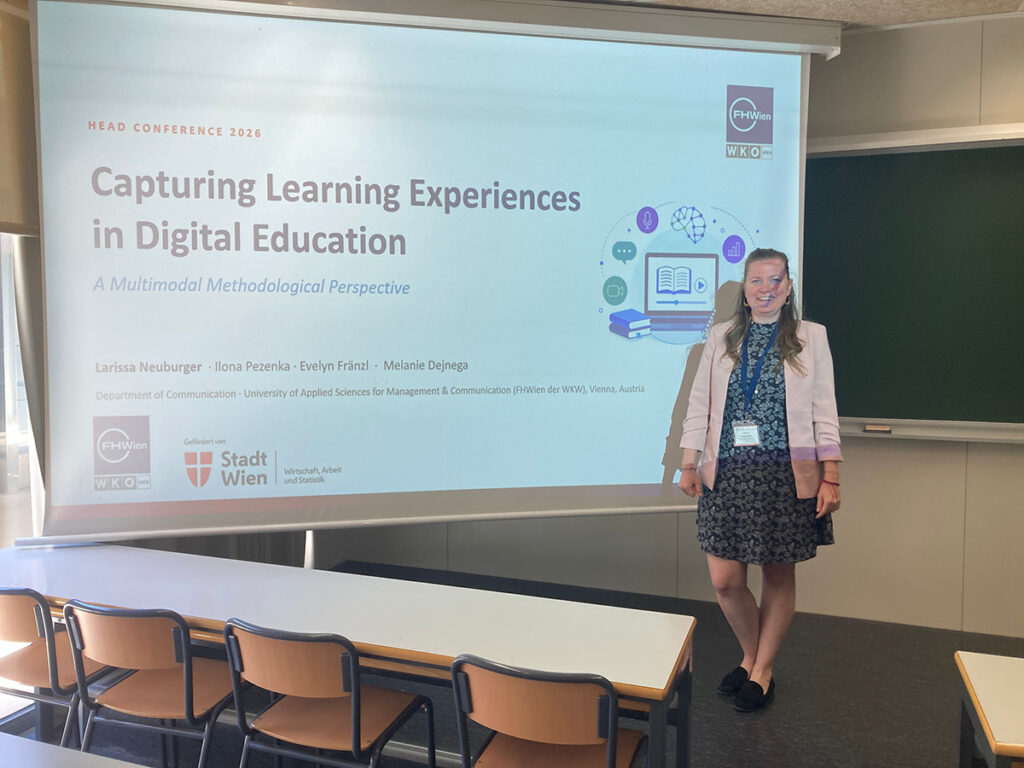
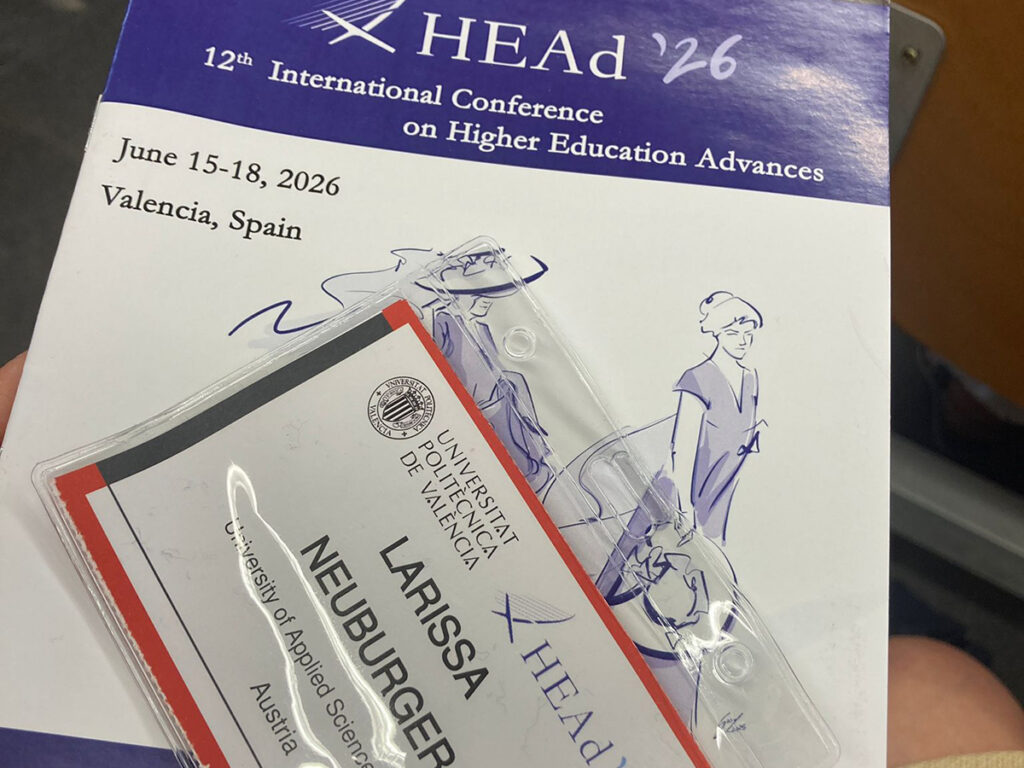
Larissa Neuburger from the Competence Team for Bridging Courses in Research Skills & Methods presented this research approach at the 12th International Conference on Higher Education Advances (HEAd’26) in Valencia (June 15–18, 2026). The paper, titled “Capturing Learning Experiences in Digital Education: A Multimodal Methodological Perspective,” generated significant interest and sparked a lively discussion that highlights the focus of the research project: Digital learning experiences can only be fully understood by combining various data sources. At the same time, the importance of social interaction was emphasized, even in AI-supported learning environments.