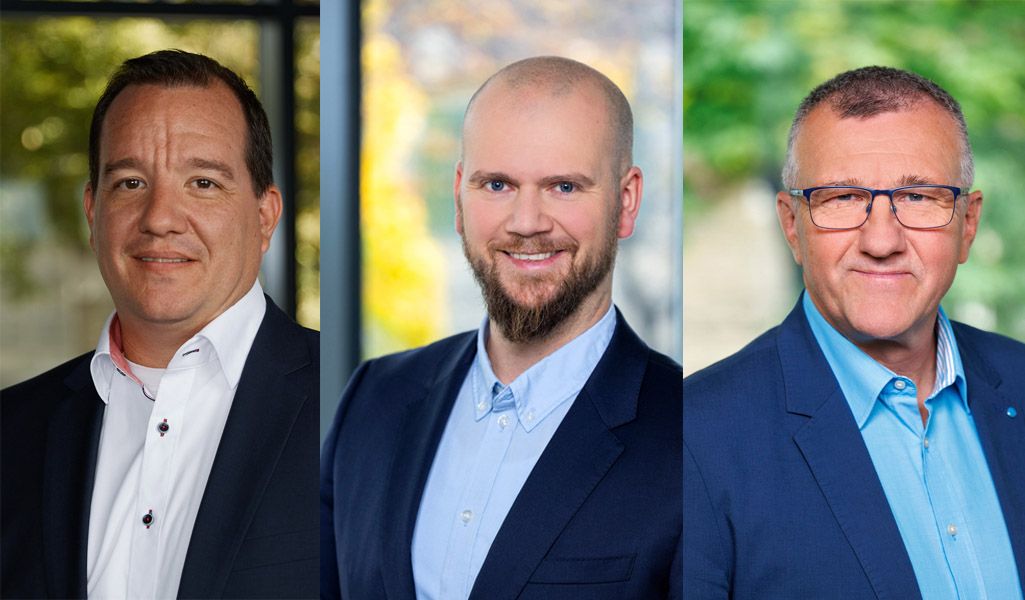
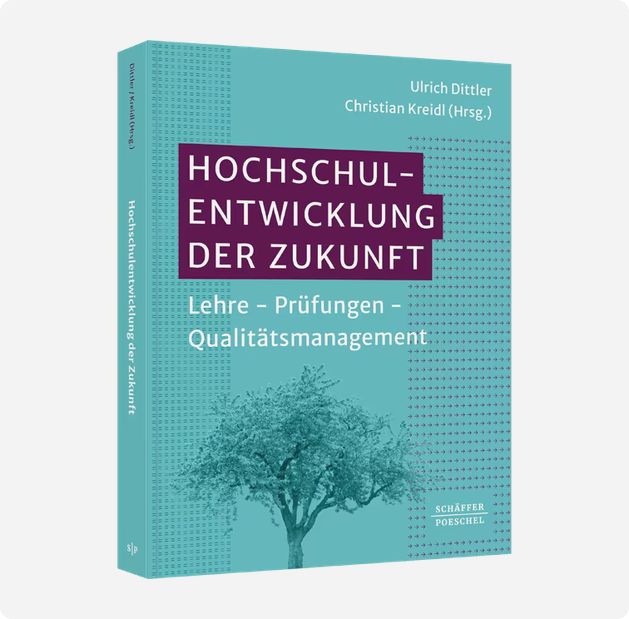
Researchers at the Department of Management at FHWien der WKW are developing an effective and practice-oriented didactic framework for integrating academic theory and professional practice within a dual study program. Florian Aubke, Peter Klinger, and Edmund Panzenböck have now published their findings in an article in the book “Hochschulentwicklung der Zukunft” (Higher Education Development of the Future).
Systematically Linking Theory and Practice
In dual study programs, a significant portion of learning takes place outside the university. Students acquire skills not only in classroom settings but also in partner companies. To ensure this results in a coherent learning process, both learning environments must be specifically linked.
Florian Aubke, Peter Klinger, and Edmund Panzenböck examine which design principles support this connection. Their article was published in the book “Hochschulentwicklung der Zukunft”. The publication focuses on current approaches to the further development of universities. In it, the researchers from FHWien der WKW contribute the perspective of cooperative and applied degree programs.
Using Practical Training Phases Strategically for Competency Development
Their approach to connectivity-oriented didactics does not view practical training phases as a mere supplement to academic study. Rather, the university, the host company, and the students are expected to share responsibility for competency development.
The proposed model divides the practical training phase into three sections: before, during, and after the work placement. At the start, learning objectives, roles, and expectations are established. During the practical phase, regular meetings and feedback tailored to learning objectives ensure ongoing support. Afterward, experiences are reflected collectively and used to further develop the academic program.
Digital tools support this process. Learning management systems provide transparency regarding goals and procedures. E-portfolios document learning progress and encourage reflection. Online communities also facilitate exchange among students.
Putting Theoretical Findings into Practice
Using the dual bachelor’s program Tourism Management at FHWien der WKW as an example, the researchers demonstrate how this approach can be implemented in practice. A continuous quality cycle links goal setting, support, evaluation, and further development. In this way, practical phases become predictable, transparent, and effective learning components of the program.
Based on these findings, the City of Vienna Competence Team for Work-Integrated Learning – Connectivity-Oriented Internship Didactics (WILKOP), which is based at the Department of Management at FHWien der WKW and led by Edmund Panzenböck, is developing a structured concept for professional internships that can be implemented across institutions and that equally involves and supports students, host companies, and faculty.
The book “Hochschulentwicklung der Zukunft” is available at shop.haufe.de. (in German).