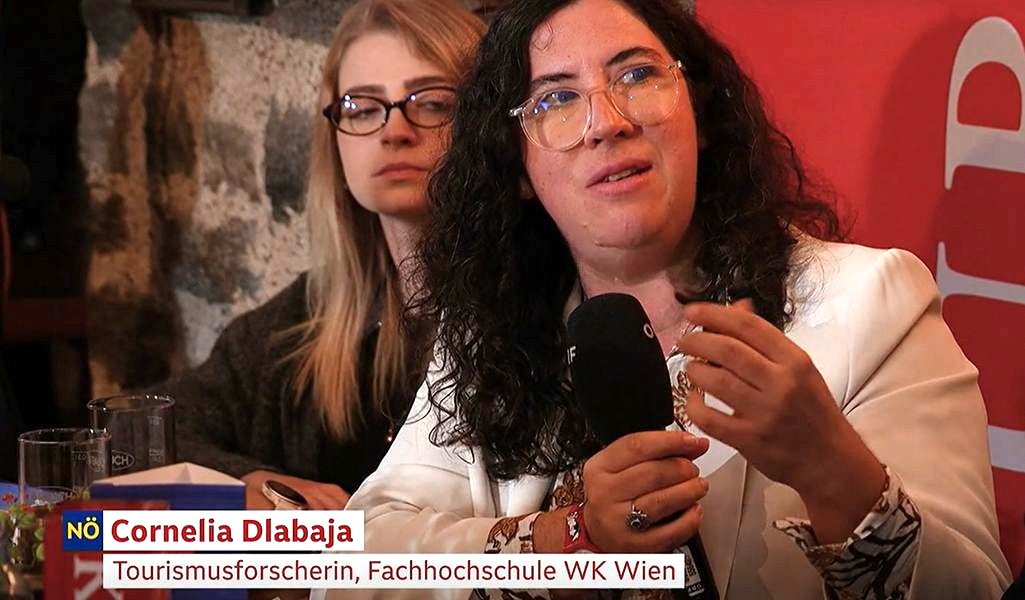
How can heavily visited destinations benefit from tourism when the quality of life for residents suffers due to the influx of visitors? Cornelia Dlabaja, Endowed Chair for Sustainable Urban and Tourism Development at FHWien der WKW, shared research findings from Hallstatt and Venice during an ORF discussion in Dürnstein.
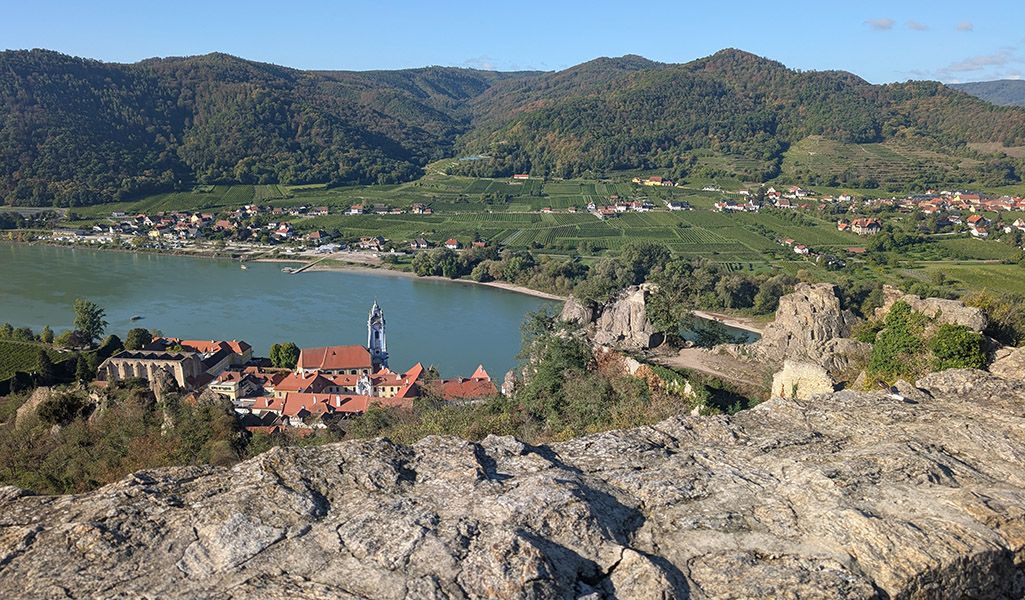
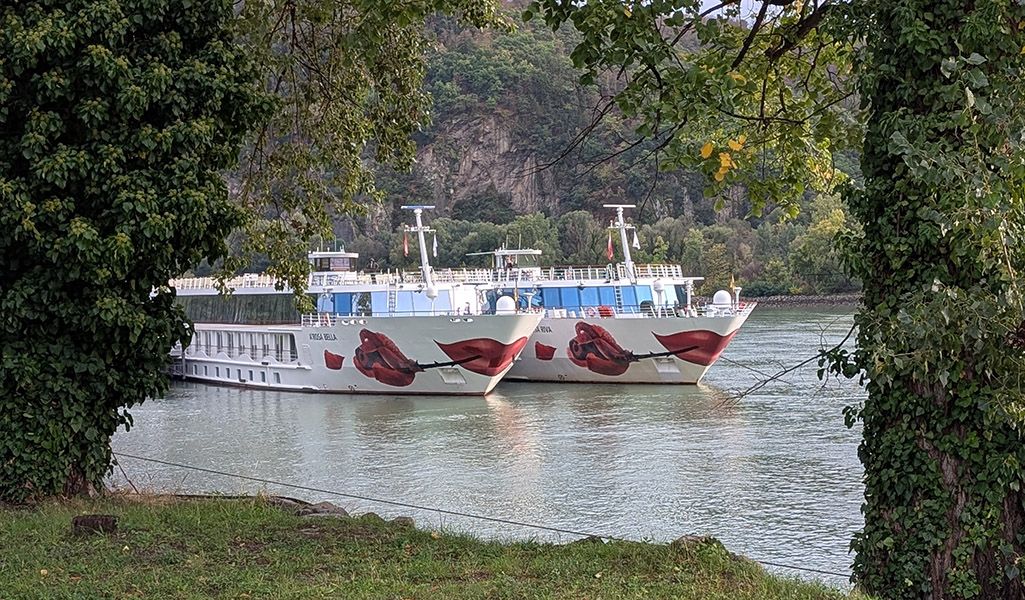
Dürnstein is one of the most visited destinations in the Wachau region. Especially on peak days, guests from cruise ships and tour buses, as well as cyclists and independent travelers, all converge simultaneously in the town’s narrow streets. At the end of September 2026, experts, tourism businesses, and locals discussed how the economic importance of tourism can be reconciled with the quality of life for the local population on the ORF Niederösterreich program “Ein Ort am Wort“.
Creating Local Economic Value for Municipalities – Instead of Admission Fees
Cornelia Dlabaja contributed insights from her research on heavily visited tourist destinations. The endowed professor is particularly critical of the notion that admission fees could easily solve the problem. Experiences from Hallstatt and Venice show that such measures are by no means perceived solely positively by the local population. Residents might feel even more strongly that their own living space is being turned into a tourist attraction.
With its digital bus system and co-ownership of the “Heritage Hotel,” Hallstatt demonstrates how value can be generated for the community. These revenues make new affordable housing possible and finance local amenities for the residents.
Cooperative Governance and Managing Visitor Flows
The discussion also showed how thriving tourism is not just about the number of visitors. It is equally crucial when and where they converge in the town. That is why Dürnstein invested in a visitor management system several years ago. A planned counting system is intended to indicate in the future where particularly large numbers of people are moving at specific times. This would allow groups to be distributed across different routes or time slots.
Dlabaja’s presentation highlighted a central aspect of sustainable tourism development: there is a need for cooperative governance between small communities such as Dürnstein or Hallstatt and the state and federal levels. Furthermore, EU regulations serve as a tool for establishing clear rules. A package of measures is needed, such as diversified destination development and clear rules for organizing day tourism. The development of these towns should also consider the perspective of the people for whom the tourist destination is, above all, one thing – their home.
A short segment on the discussion in “Niederösterreich heute” (available until Oct. 25, 2026, in German) and the full one-hour program “Ein Ort am Wort” (available until Mar. 23, 2027, in German) are available on ORF ON.