Marian Adolf, Andreas Hess, and Gisela Reiter from the Department of Communication presented a recent study at the European Communications Conference (ECC) 2026 in Brno (Czech Republic) that examines the effects of changing media usage on the democratic resilience of modern societies.
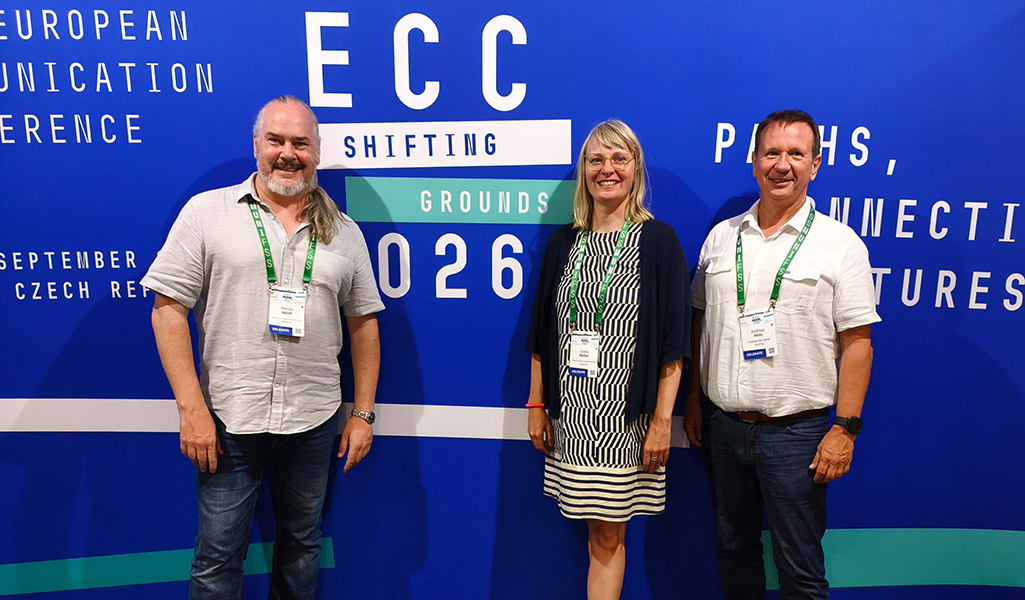
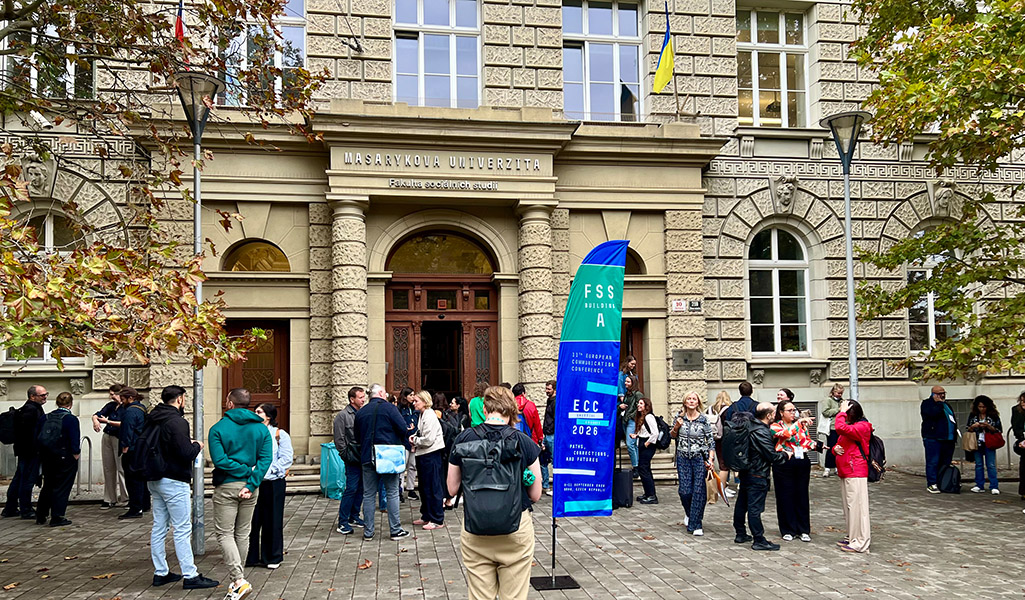
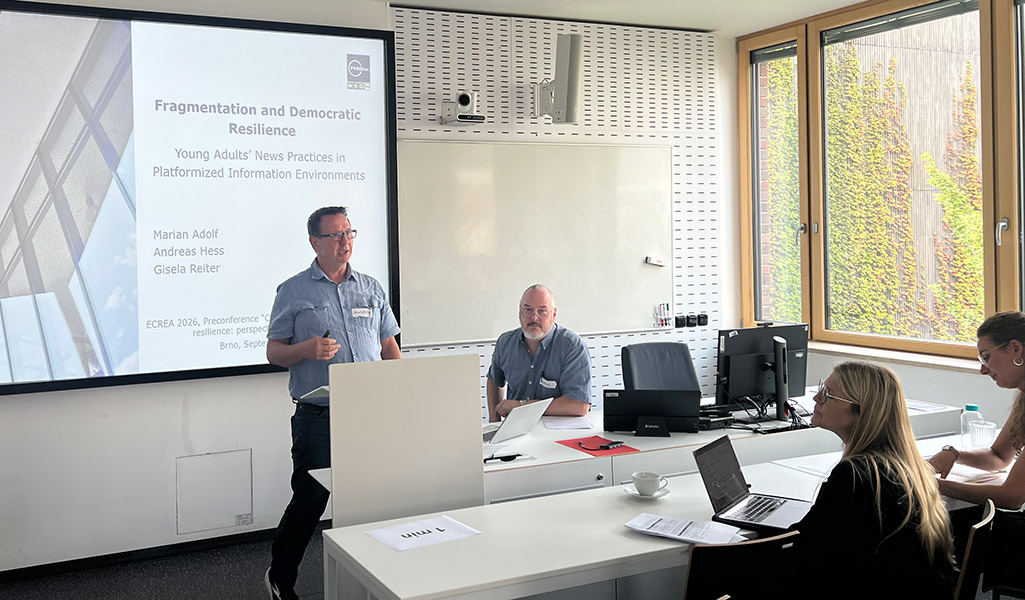
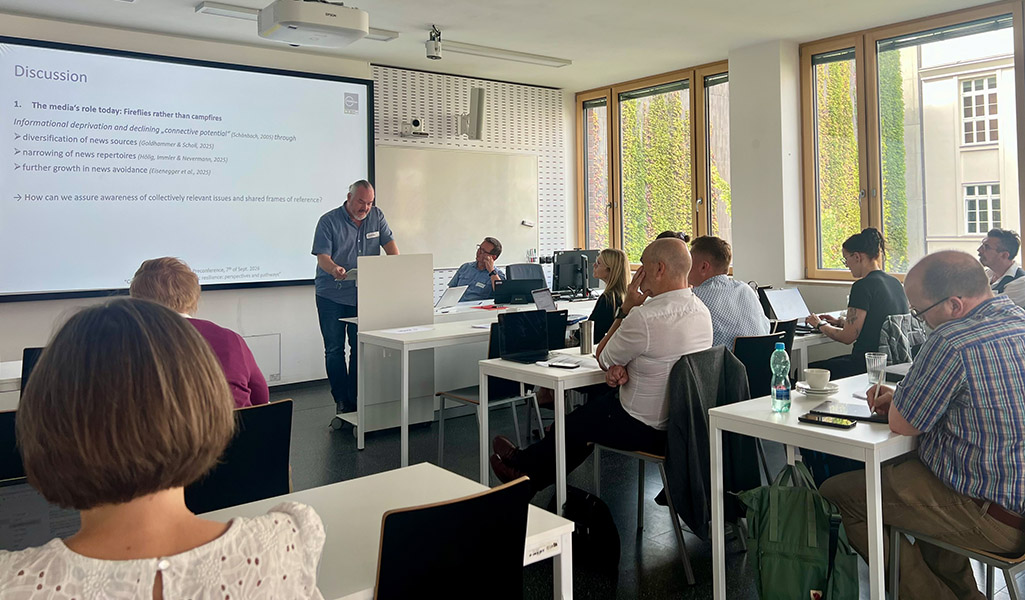
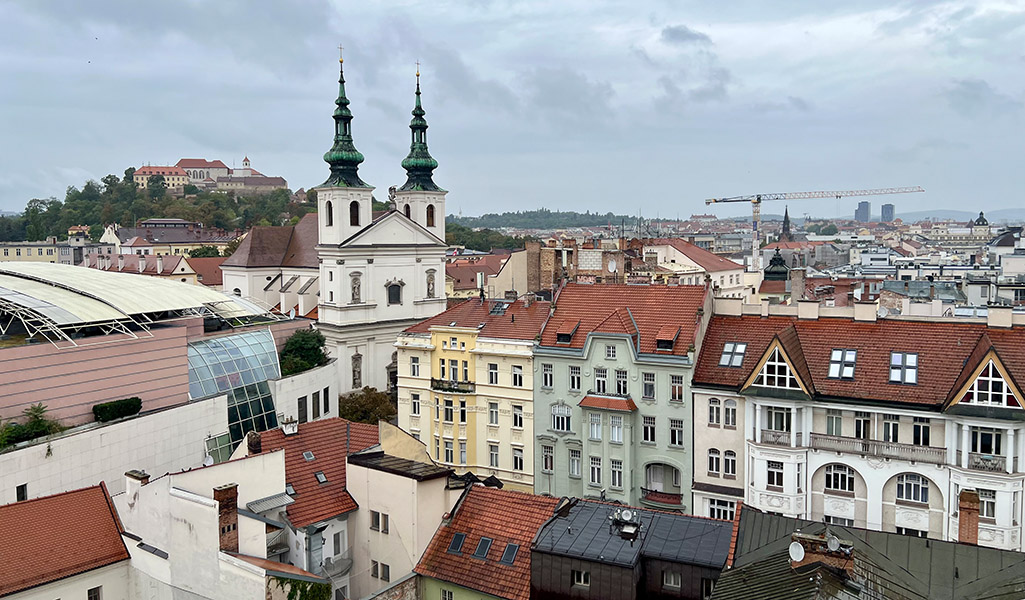
ECC26 is organized by the European Communication Research and Education Association (ECREA) and took place from September 7 to 11, 2026 in Brno. With approximately 1,600 international delegates this conference ranks among the most important gatherings in European communication research. Representing FHWien der WKW were Marian Adolf, Andreas Hess, and Gisela Reiter from the Department of Communication.
Media Are Changing Democratic Discourse
The presentation focused on the question of what consequences the increasingly fragmented and personalized media landscape has for democratic societies. While traditional media used to provide a largely shared source of information and entertainment, attention is now spread across numerous digital sources. At the same time, algorithms are increasingly influencing what content individual people are exposed to.
Foundations for Democratic Resilience
The study distinguishes between two key prerequisites for democratic resilience. On the one hand, citizens need a reliable information base to be able to weigh political decisions. However, disinformation and excessive partisanship can weaken this foundation. On the other hand, shared cultural frames of reference are important: stories, symbols, and media experiences that are shared across society are becoming increasingly rare in an individualized media landscape.
The study concludes that media fragmentation is more than just a side effect of digital transformation. It can undermine the common foundations of communication within society. This makes it even more important to find ways to facilitate dialogue across political camps, cultural preferences, and digital media structures.
>> More information on research at the Department of Communication