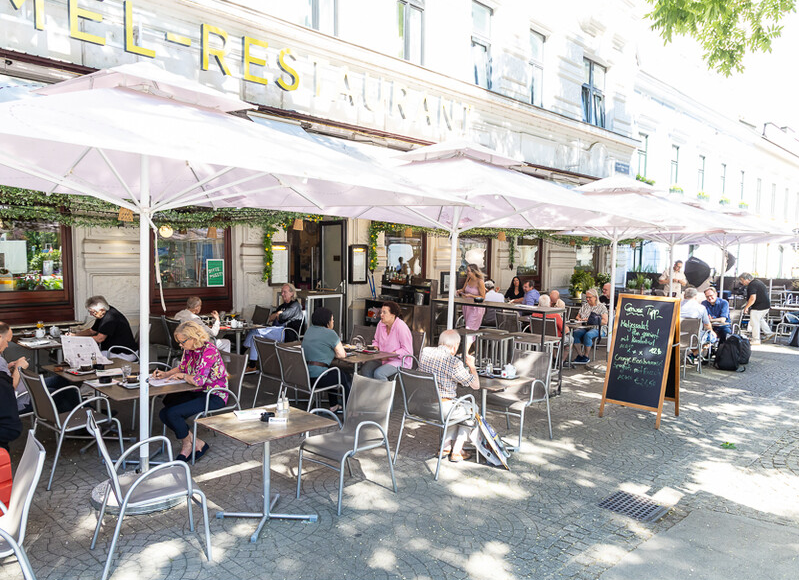
Outdoor dining areas are a staple of Vienna’s cityscape. Yet their significance extends far beyond the culinary offerings. They serve as neighborhood gathering places, shape public spaces and give international visitors a glimpse into everyday Viennese culture.
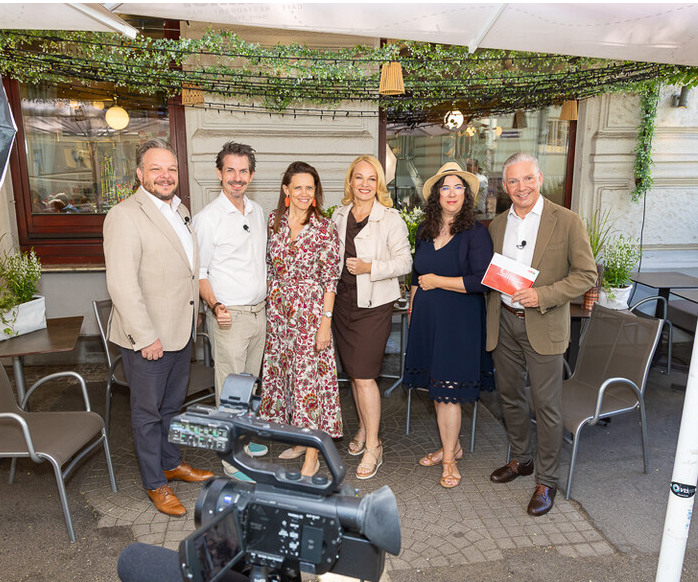
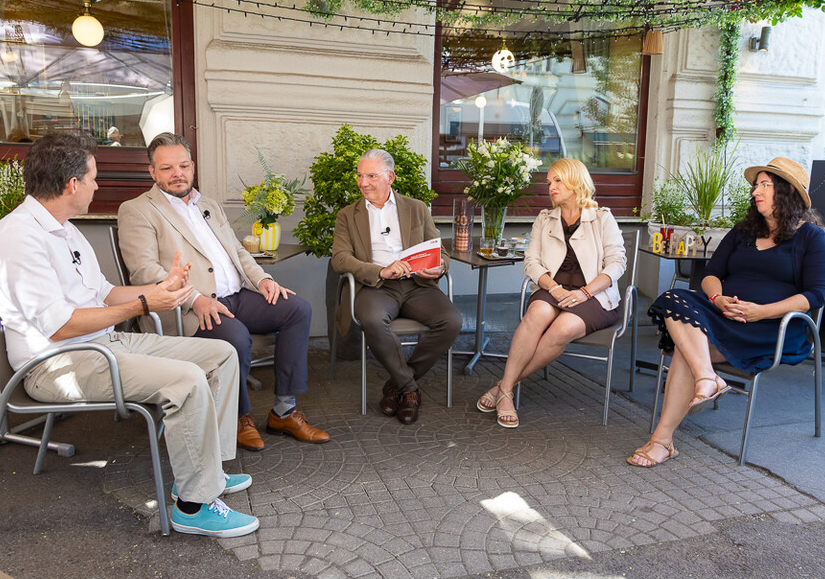
At the Vienna Chamber of Commerce (WKW) “Wirtschaftstalk”, representatives from the restaurant industry, tourism and academia discussed the role of these special places. Among the participants was Cornelia Dlabaja, Endowed Chair of Sustainable Urban Tourism at FHWien der WKW. She focused in particular on the social and urban sociological significance of the Schanigärten.
Under the theme “The Schanigarten—Viennese Summer Oasis”, Cornelia Dlabaja was joined in the discussion by Dominic Schmid, Chair of the Tourism and Leisure Industry Division at the WKW, Christina Hummel, owner of Café Hummel, and Thomas Peschta, Chair of the Gastronomy Section at the WKW. The discussion centered on the economic and social role played by Vienna’s approximately 3,500 outdoor dining areas.
The Neighborhood as the City’s “Social Nucleus”
From Cornelia Dlabaja’s perspective, dining venues are closely linked to Vienna’s social fabric and community life. During the business talk, she described the neighborhood as the “social nucleus of the city.” Coffeehouses, restaurants and outdoor dining areas create spaces where people can meet and nurture relationships.
From her perspective, it is precisely this sense of community that contributes to people’s well-being. The difference between dining out and a delivery service, therefore, lies not solely in where the meal is consumed. “I can have a pizza delivered, but what I’m really looking for is social interaction,” Dlabaja explained during the talk. This function is particularly evident among regulars who frequent the same establishments and thereby become part of a social fabric.
“Schani, take the garden outside.”
According to Dlabaja, the Schanigarten also plays a major role in tourism—not least because of its historical roots. Its history dates back to the 18th century: The first Schanigarten was established in 1754 on the Graben and is said to have been named after the waiter “Giovanni,” or Johann in German.
“From a cultural-historical perspective, the Schanigarten is part of the city’s DNA and is integral to its history and everyday life,” explains Dlabaja. From the perspective of urban studies, it can also be understood as a so-called “third place”: a space—besides one’s home and workplace—where people come together and spend time.
The Schanigarten thus becomes an urban living room and, in a sense, part of the urban landscape’s furnishings. This perspective shows that its significance does not end at the boundaries of a restaurant or café. Schanigärten help shape public space and influence how people experience and use their city.
A Taste of Everyday Life in Vienna for International Guests
It is precisely this everyday function that makes Schanigärten appealing to tourists as well. For visitors, they can serve as a gateway to Vienna’s coffeehouse and dining culture. At the same time, they remain places that are heavily frequented by the local population.
For Dlabaja, this is what makes them special: Viennese people feel at home here. For guests from other countries, this offers the opportunity not only to visit a tourist attraction but also to experience a slice of everyday Viennese life. The Schanigarten thus combines the tourist experience with the local way of life.
>> More information about the Endowed Chair for Sustainable Urban Tourism