From June 1-5, 2026, five students from FHWien der WKW participated in the Erasmus+ project Europe on Air in Sofia, Bulgaria. The long-running project brings together journalism students from across Europe to explore current media and societal issues. This year’s participants came from Austria, Bulgaria, Belgium, Finland, Georgia and Spain.
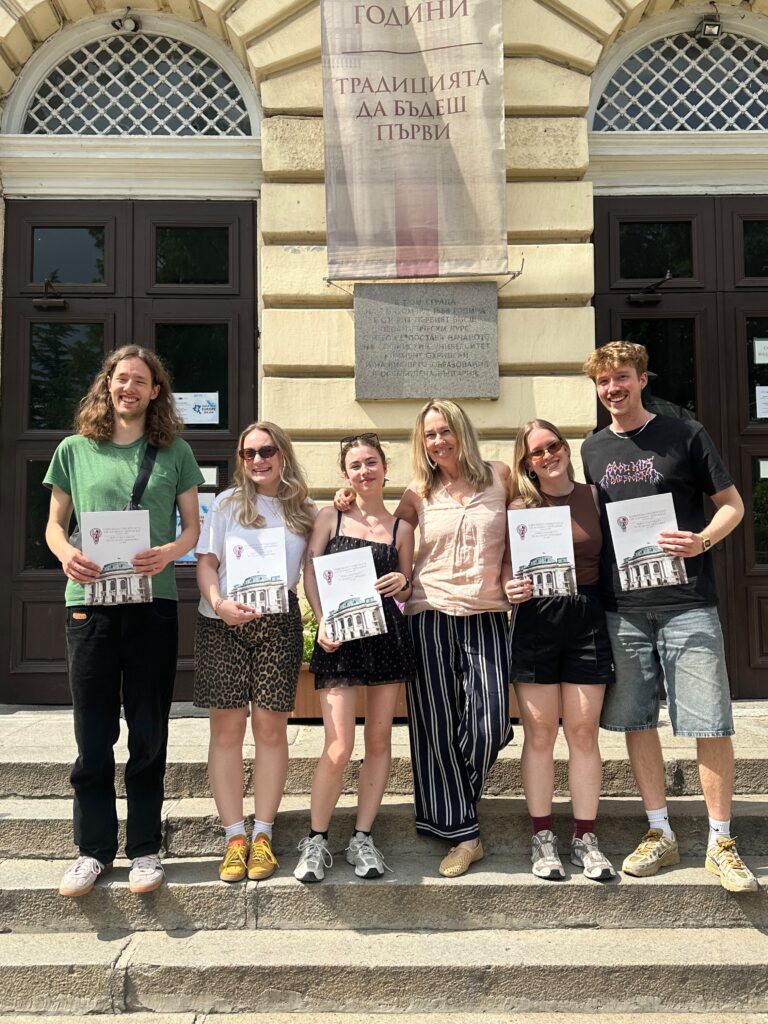
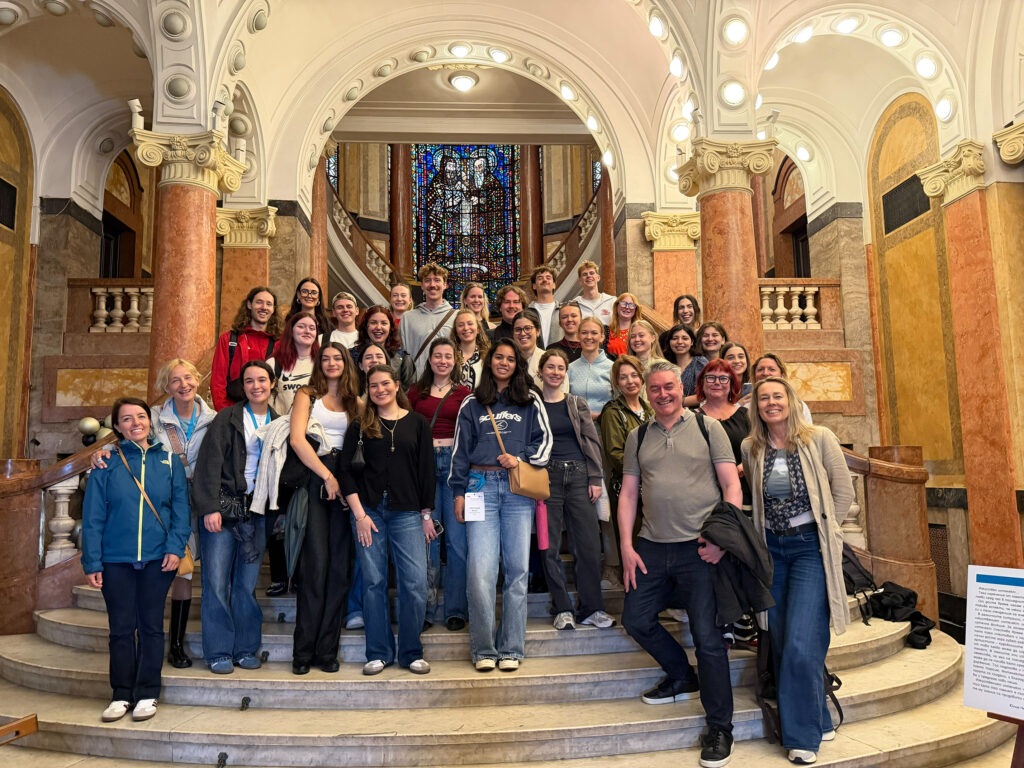
The project began well before the participants travelled to Sofia. Each partner university produced a 15-minute radio feature on the overarching theme “How Social Media Affects Social Change.” The Austrian team examined how social media can contribute to the spread of racism in Austria.
At the beginning of the project week, all radio features were presented and discussed. The discussions highlighted the many different ways in which social media influences societies across Europe. Topics ranged from dating culture and running clubs to the role of social media for artists.
Researching Together, Learning from Each Other
During the project week, the students were divided into international teams to produce new journalistic stories. Their topics included fact-checking, deepfakes and the BookTok phenomenon. To support their reporting, the teams conducted interviews with experts and influencers, as well as street surveys in Sofia.
One of the project’s greatest strengths was the collaboration within the international teams. Students with different academic backgrounds, professional experiences and cultural perspectives worked together intensively for one week. Despite differences in working styles, languages and cultures, a strong team spirit quickly emerged, creating valuable opportunities to learn from one another and gain new perspectives.
The program was complemented by expert lectures and a visit to an AI data centre featuring a high-performance supercomputer, providing fascinating insights into current developments in artificial intelligence.
The Highlight: International Exchange
Beyond the journalistic work, intercultural exchange was at the heart of the project. New friendships, international networks and valuable insights into different cultures and ways of life made the experience particularly rewarding.
Participants also had the opportunity to experience Bulgarian culture firsthand. During a traditional dance workshop, they learned Bulgarian folk circle dances and were able to put their new skills into practice at the project’s farewell dinner.
Special thanks go to Sofia University St. Kliment Ohridski for organising the project, designing an engaging programme and providing such warm hospitality. Once again, Europe on Air demonstrated the value of international collaboration—not only for journalism education, but also for broadening participants’ personal and intercultural horizons.