AI agents, drones, digital twins, and automated real estate appraisals: New technologies are rapidly transforming the real estate industry. The 4th Digital Real Estate Day, held on September 14, 2026, at FHWien der WKW, demonstrated how these technologies are already being used in practice today.
Digitalization therefore also plays an important role in the Real Estate Management study programs. At the Digital Real Estate Day, held in cooperation with ivalu, the connection between academic study and professional practice was particularly evident: Several of the applications presented are already being used in courses or were founded by faculty members or graduates of the program.
Nine PropTech Companies, Nine Different Approaches
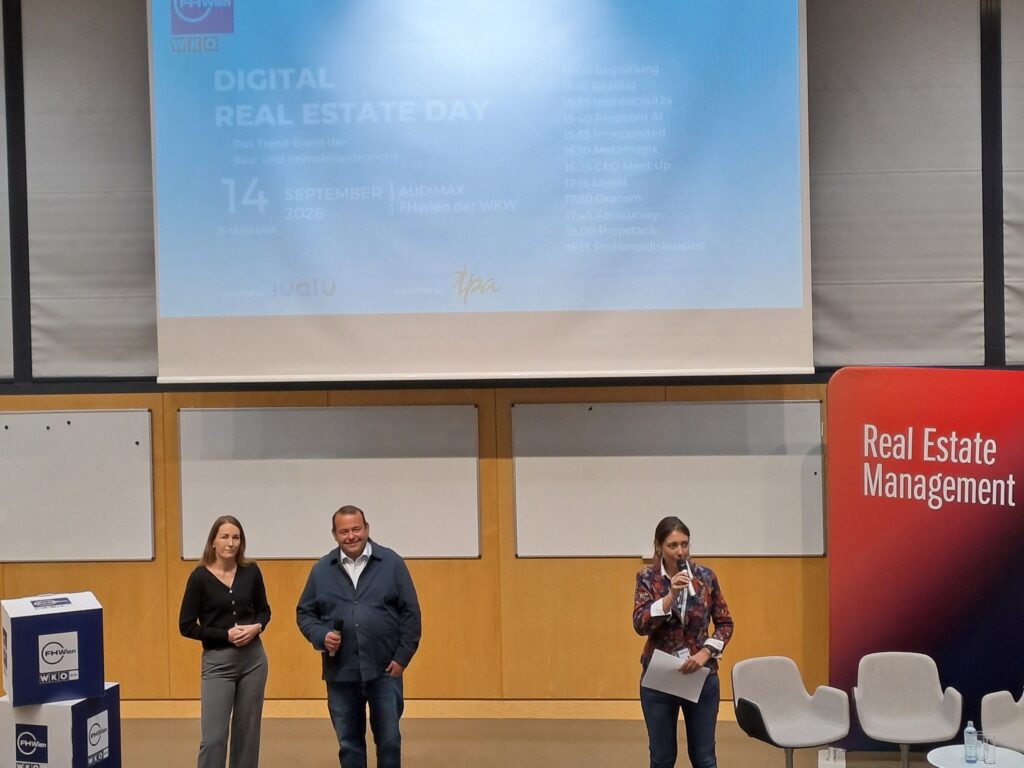
From real estate marketing and project development to asset management and property management, and even technical assessments, nine companies presented their digital solutions covering the entire real estate lifecycle.
REALITIQ: With digital twins, AI-powered visualizations, and virtual tours, new construction projects and existing properties can be explored digitally and presented in a personalized way.
ImmoScout24 demonstrated that behind the well-known real estate platform lie comprehensive data solutions, such as an Austria-wide purchase price map based on land registry transactions, as well as tools for analyzing prices, competitors, and marketing strategies.
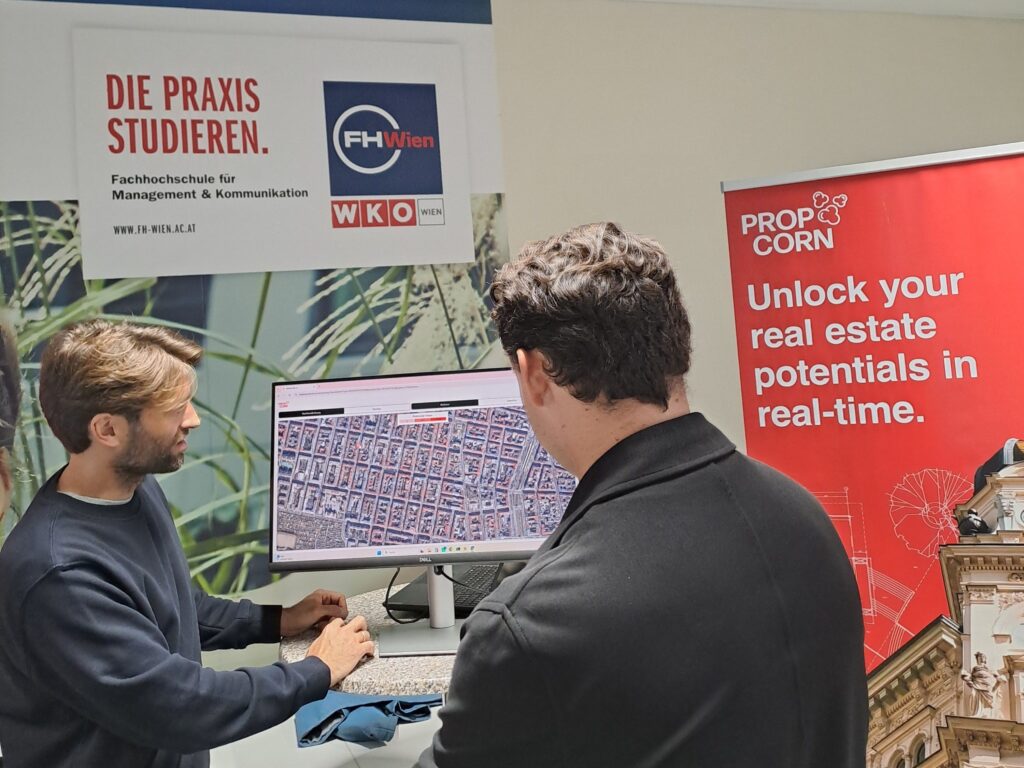
PROPCORN AI combines real estate, zoning, and building code data with artificial intelligence. Among other things, the platform identifies unused plots of land and opportunities for infill development, thereby supporting project developers in their search for potential locations.
IMMOunited demonstrated how data and AI can assist in real estate valuation. The AI-powered price check uses actual purchase contracts recorded in the Austrian land registry, along with location information, to generate an automated valuation of a property.
metamagix focuses on the data-driven management of real estate portfolios. The ICRS software consolidates processes—from planning and acquisition through operations and development to marketing, controlling, and stakeholder communication—on a single platform.
Layest is already looking ahead to the next stage of development: AI agents that not only provide information but also independently carry out tasks within operational processes.
Oracom focuses on automating customer and resident communication. AI-powered systems handle inquiries via channels such as phone, email, web forms, chat, and messaging apps, thereby alleviating the burden on companies with high communication volumes in particular.
AeroSurvey demonstrated that digitalization in the real estate industry extends far beyond traditional software. The company uses drones to survey buildings and generates, among other things, georeferenced image data, 3D models, and point clouds that can be used for asset documentation, building inspections, or planning.
To wrap things up, Propstack brought the focus back to day-to-day real estate marketing. The real estate CRM links contacts, properties, emails, and offers, and is increasingly supplementing these processes with AI applications — for example, in property listings, image processing, and communication.
There is Plenty of Data—What Matters Is How We Use It
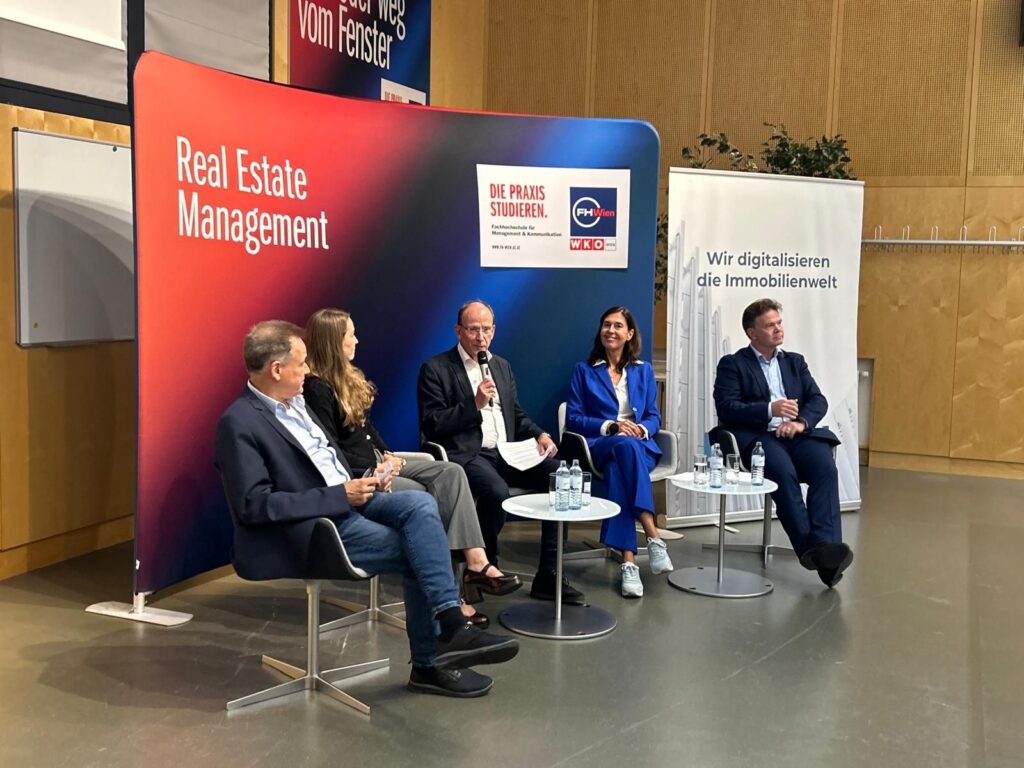
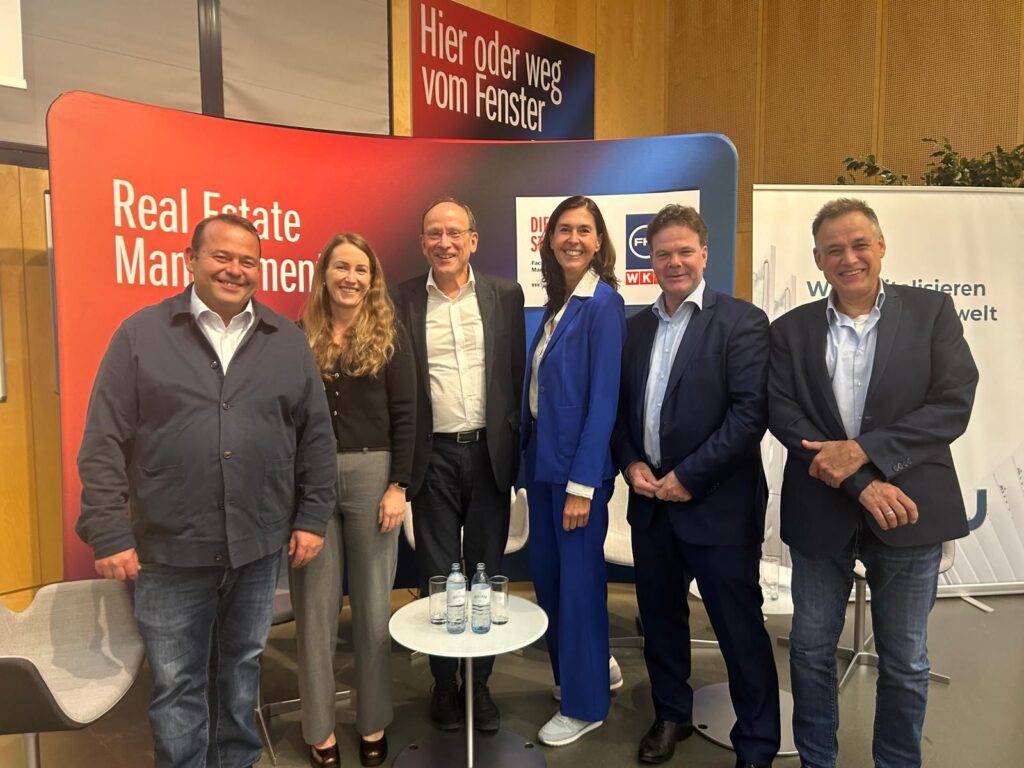
Following the presentations, the concluding panel discussion focused on the major changes taking place in the industry. Jasmin Soravia (real estate expert & business angel), Kerstin Koppensteiner (Director of TPA Austria), Klaus Walchhofer (real estate expert at KOKRON-Immobilien), and Klemens Braunisch (Head of the Real Estate Management Study Programs at FHWien der WKW) discussed — moderated by Walter Senk (Editor-in-Chief of the independent real estate editorial team)—where the real estate industry currently stands in terms of digitalization and AI, and what challenges still lie ahead.
A key point: The industry already has numerous individual digital solutions, but comprehensive and end-to-end process-driven digitization is still lacking in many areas.
This challenge is particularly evident with existing properties. While sales and customer service are already relatively well digitized, older buildings often lack a structured database. Information on contracts or buildings is sometimes still stored in physical folders and must be painstakingly compiled for transactions. Better data could further automate processes such as contract management, document control, and analysis, thereby also speeding up transactions.
What will AI be capable of in five years?
Looking to the near future, there was significant potential for automation, particularly for standardized and repetitive tasks. At the same time, the discussion set clear limits: responsibility and liability cannot simply be transferred to AI. Negotiations and decisions that require experience, context, and accountability also remain the domain of qualified experts.
As a result, AI is also changing the requirements for education. As digital systems take on more and more fundamental tasks, there is a risk that new professionals will no longer learn certain technical fundamentals on their own. Universities therefore face the challenge of integrating new technologies into teaching while ensuring that students continue to master the necessary technical “craft.”
The fourth Digital Real Estate Day thus made one thing particularly clear: digitalization in the real estate industry does not consist of a single technology. Rather, what is crucial is how companies consolidate existing data, develop functional processes from it, and deploy new technologies where they create tangible added value.
>> More information about the Real Estate Management study programs