On 28 September 2026, FHWien der WKW presented the Young Journalism Award for the eighth time. Eleven aspiring journalists received awards in five categories. These included Radio & Audio, TV & Video, Text, Multimedia and Best Thesis. The award-winning entries address a wide range of social issues – ranging from online hate and racism to drug use on construction sites, a decades-old missing-person case and conspiracy narratives.
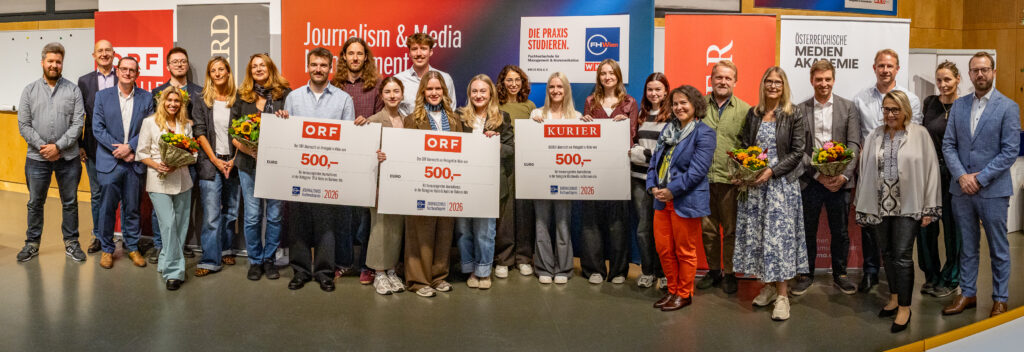
The Young Journalism Award recognizes journalistic work produced as part of journalism education and training in Austria and gives aspiring journalists a platform to showcase their work.
Online Hate and Everyday Racism
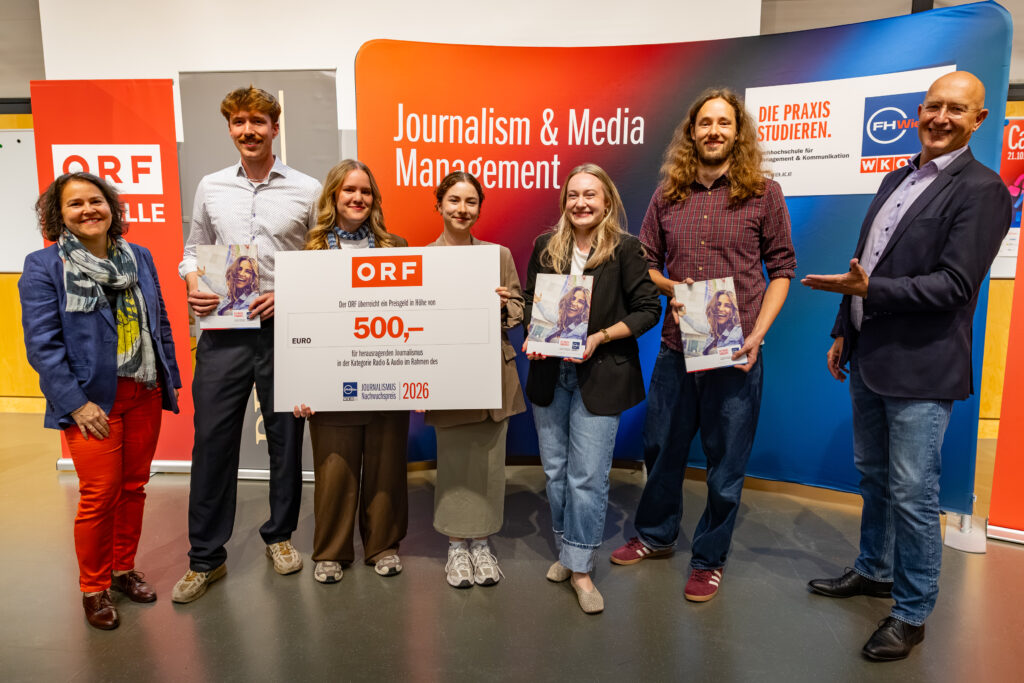
The Radio & Audio award went to Magdalena Hronek, Simon Fuchs, Anika Skubacz, Leon Spachmann and Julia Stürmer. Their feature “Beyond the Feed – A Journey Through Online Hate and Everyday Racism in Austria” explores the impact of online hate and racism. The feature follows three people in Vienna and explores how online hate and racism affect their everyday lives, complemented by expert perspectives.
Experiences of Vienna’s Car Tuning Scene
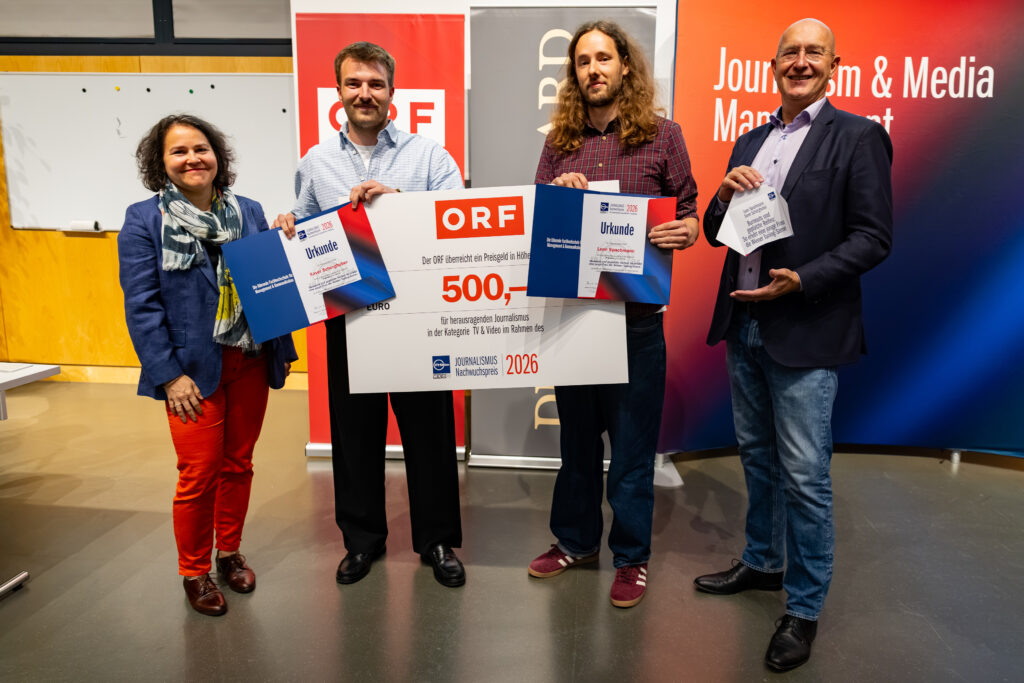
Leon Spachmann and Xaver Schörghuber won the TV & Video category. Their report “Burnouts und geplatzte Reifen: So erlebt eine junge Frau die Wiener Tuning-Szene” follows a 20-year-old woman through Vienna’s car tuning scene.
Drug Use on Austrian Construction Sites
Mario Pichler won the Text category with “Speed und Spachtel: Der Drogenkonsum auf Österreichs Baustellen nimmt zu”. The report examines drug use on Austrian construction sites through the story of an anonymised protagonist. The report examines possible causes as well as the social consequences and safety risks of drug use on construction sites.
Multimedia Report on an Unsolved Missing-Person Case
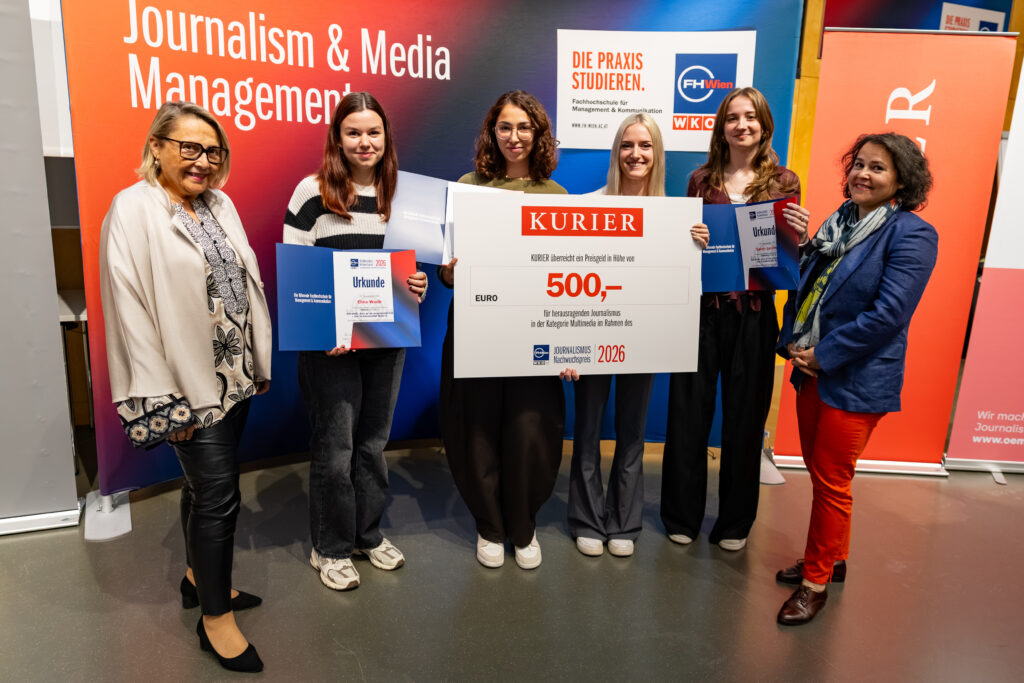
Daria Reitsammer, Sarah Lechner, Elina Wazik and Nina Schlögl won the Multimedia category. Their report “‘Ich weiß, dass er sie umgebracht hat’ – Der Vermisstenfall Maria O.” reconstructs a disappearance from the 1980s. It examines why the case has remained unsolved for decades.
Thesis on Conspiracy Narratives in Alternative Media
The Best Thesis award also went to Mario Pichler. His master’s thesis examines conspiracy narratives in alternative media. It focuses on AUF1’s coverage of Austria’s 2024 parliamentary election. As part of his thesis, Pichler developed the 26-page print dossier “Glaubst?”. Its design deliberately draws on the visual language of publications associated with conspiracy narratives.
Media Partners Support the Young Journalism Award
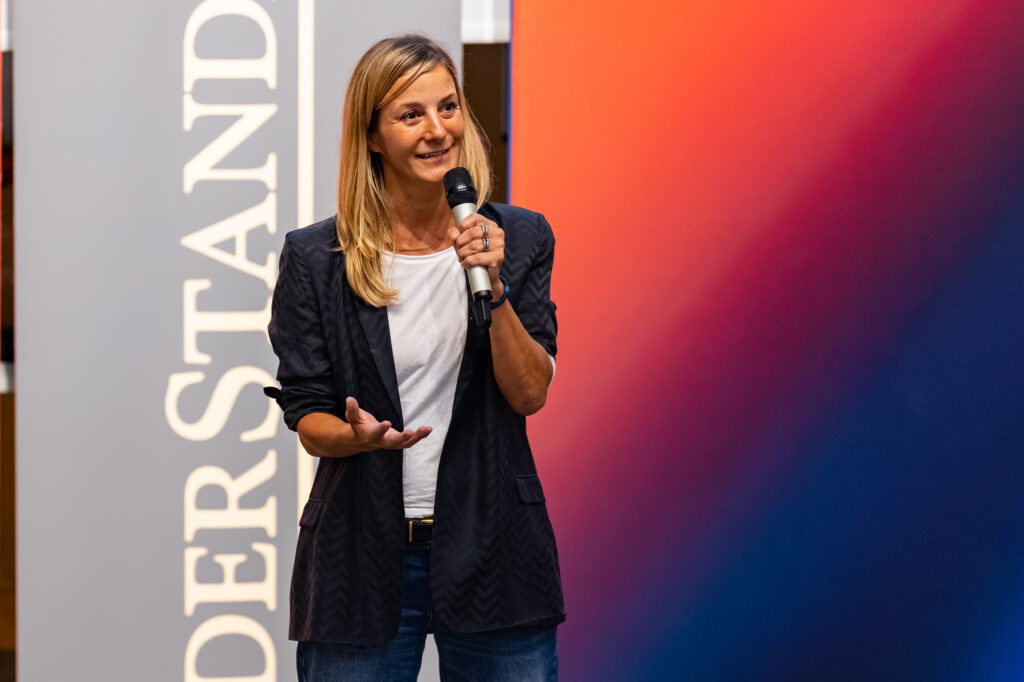
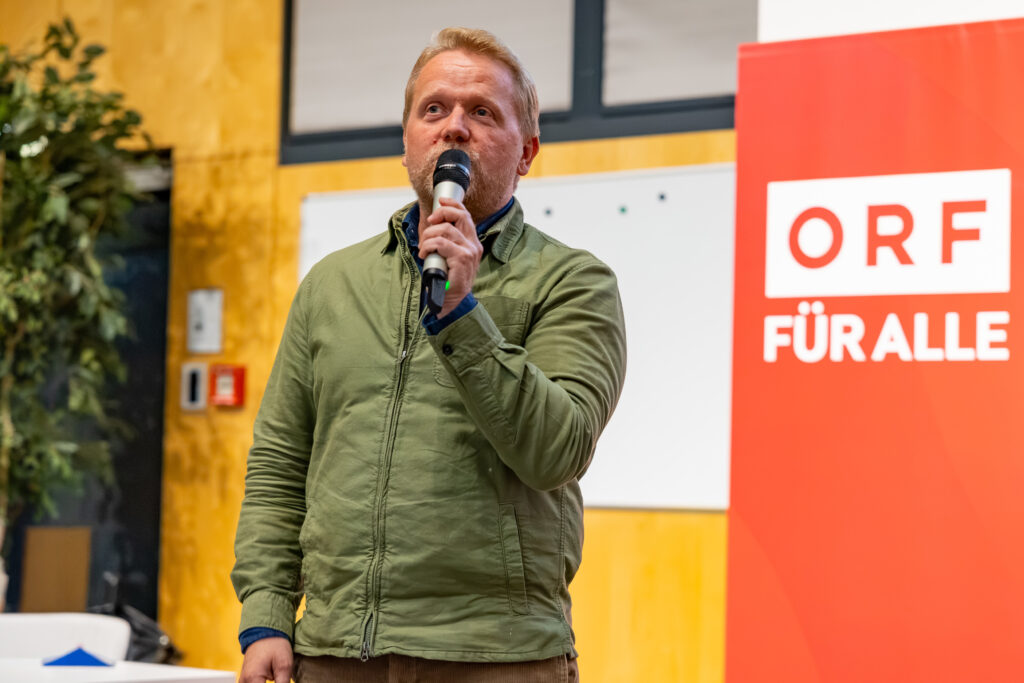
In 2026, the Young Journalism Award was once again presented with the support of established partners from the media industry. ORF supported the Radio & Audio and TV & Video categories. The awards were presented by Konrad Mitschka from ORF’s Public Value Competence Center. DER STANDARD sponsored the Text category, with Deputy Editor-in-Chief Nana Siebert presenting the award. KURIER supported the Multimedia category.
Each of the four main categories carried prize money of €500. The Austrian Media Academy (ÖMA) provided a place in one of its seminars for the winner of the best thesis category, in addition to the €500 prize money awarded by FHWien der WKW.
“The support of established media organizations underlines the standing of the Young Journalism Award within the industry,” says Daniela Süssenbacher, Head of the Journalism & Media Management Study Programs at FHWien der WKW and Chair of the Jury. “It gives journalistic work produced during education and training additional visibility. At the same time, the award-winning entries demonstrate the high standards with which the next generation of journalists is addressing issues of relevance to society.”
The submitted entries were assessed by an independent expert jury comprising journalists and experts from FHWien der WKW. The evaluation criteria included journalistic craftsmanship, creative execution and the societal relevance of the entries.
About the Young Journalism Award
The Young Journalism Award of FHWien der WKW is aimed at aspiring journalists who are currently completing or have recently completed journalism education or training in Austria. Eligible entries are journalistic works produced as part of a program at an Austrian university, academy, training newsroom or another educational institution with a focus on journalism.